
PC-50c-1976-01R Pre-Cud
Error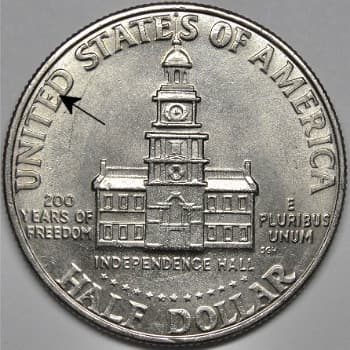
Description
Cataloged by the Cuds on Coins attribution service, PC-50c-1976-01R documents the first reverse pre-cud identified on the 1976 Kennedy half dollar — one of the three denominations (quarter, half dollar, and dollar) that received special Bicentennial reverse designs to commemorate the nation's 200th anniversary. The designation follows the standardized format: PC for pre-cud, 50c for the half dollar denomination, 1976 for the dual-dated issue, and 01R indicating the first cataloged reverse pre-cud. The Bicentennial Kennedy half dollar reverse, designed by Seth G. Huntington, depicts Independence Hall in Philadelphia — a departure from the standard heraldic eagle reverse designed by Frank Gasparro that normally appears on the denomination. This architectural reverse, with its detailed rendering of the historic building's facade, columns, and clock tower, creates different stress distribution patterns in the die compared to the standard eagle design, potentially affecting where rim fractures initiate. Pre-cuds capture the transitional stage of die failure where a rim crack has developed but the fractured section remains structurally attached, producing a raised but connected anomaly on struck coins rather than the full break-away cud that would develop with continued die service. The combined Philadelphia and Denver production of copper-nickel clad Bicentennial half dollars — struck across 1975 and 1976 — exceeded 521 million pieces, a massive output that consumed working dies throughout the extended production period. The 01R designation as the first and possibly only documented reverse pre-cud suggests that half dollar dies, being larger than cent or nickel dies, may distribute striking forces differently across the die face, potentially reducing but not eliminating rim fracture frequency. Collectors can identify this pre-cud by examining the reverse rim systematically under 5-10x magnification for a localized raised area or profile irregularity where the Independence Hall design meets the rim, distinguishing it from normal rim contact marks by its raised character and die-state consistency.
External References
Community & Reference
Related Errors
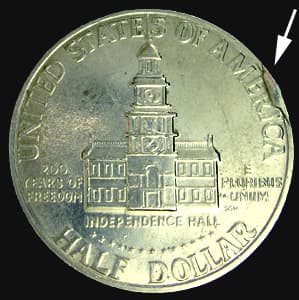
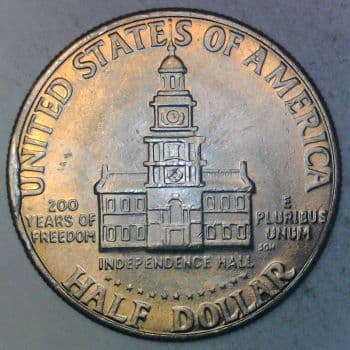
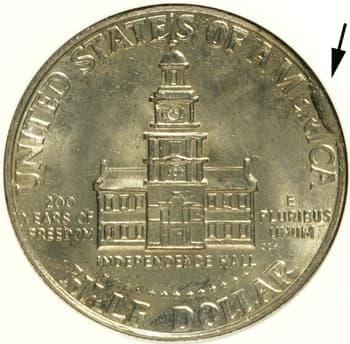
More Pre-Cud Errors


Collector Essentials
Tools for examining and preserving error coins and die varieties.
10x-20x Jeweler's Loupe
Essential for examining die varieties, doubled dies, and RPMs
Cherry Picker's Guide
The definitive reference for U.S. error coins and die varieties
2x2 Coin Flips & Holders
Protect and organize your finds with archival-quality holders
USB Digital Microscope
Capture detailed images for documentation and community submissions
As an Amazon Associate, NumisDex earns from qualifying purchases.