
1880-P VAM-1C
Error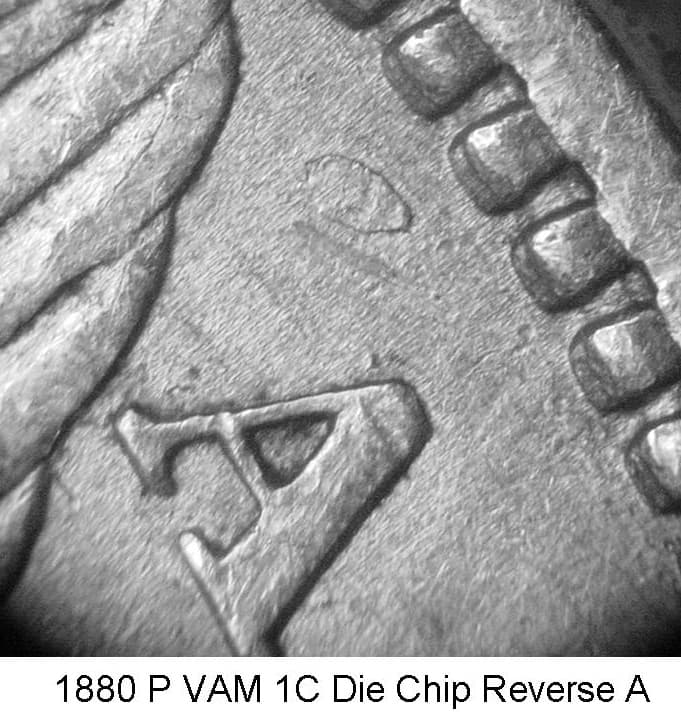
Description
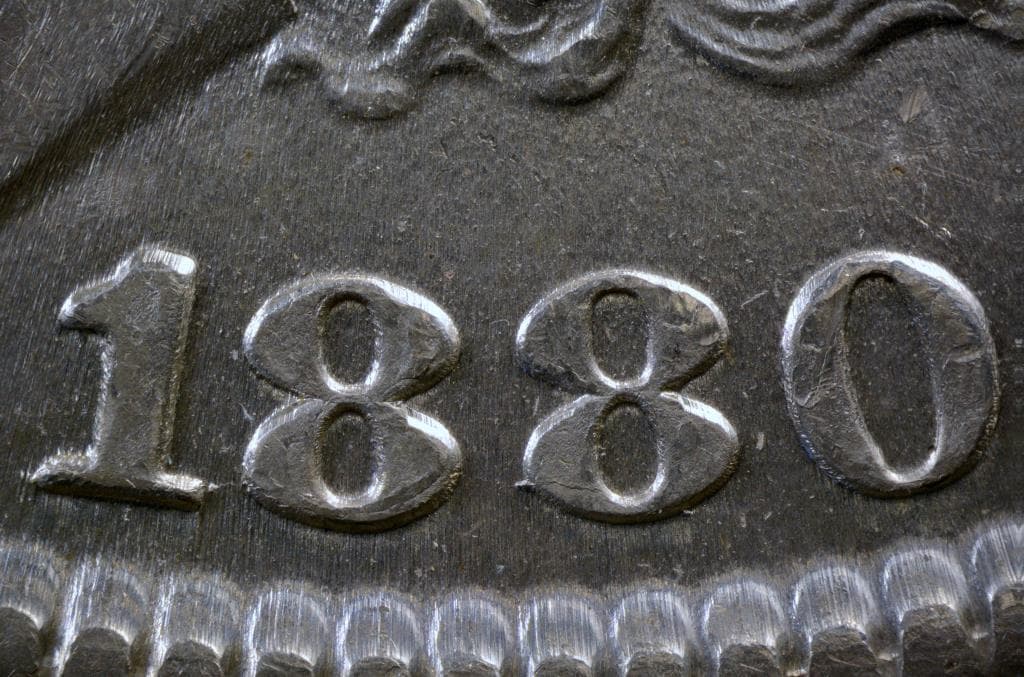
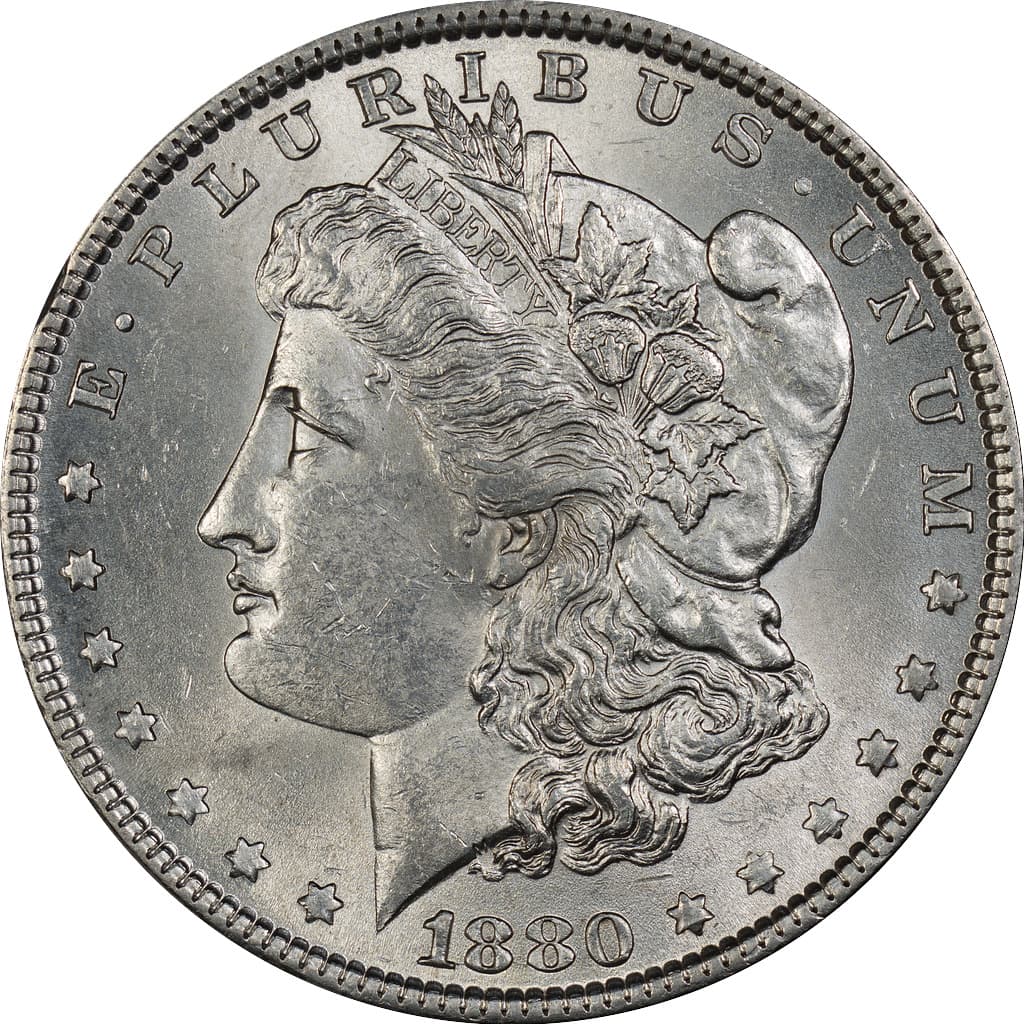
Discovered by George Powell in July 2002, the 1880-P VAM-1C documents a die chip at the first A in AMERICA on the reverse, though the listing carries a "dubious listing" notation because the feature resembles a lamination issue rather than a true die chip. Cataloged as III21-C3a (Die Chip Reverse A) with die pairing number 180, an I-2 interest rating, and R-5 rarity (R-6 per SSDC — Silver Dollar Club data), the obverse die III21 is a normal die with no distinguishing features, while the reverse C3a shows a chip-like raised feature above and to the left of the first A in AMERICA. The distinction between a die chip and a lamination issue matters significantly for attribution: a die chip is a defect in the die itself that reproduces identically on every coin struck from that die, while a lamination is a planchet defect unique to a single coin caused by impurities or separation in the metal layers. If this feature is indeed a die chip, it would appear on all coins struck from this die pair; if it is a lamination, this specific coin's appearance would be unique. The 1880-P Morgan Dollar was struck at the Philadelphia Mint during the early years of the series, when the Bland-Allison Act mandated continued silver dollar production. The dubious listing status represents the VAM system's intellectual honesty in flagging questionable attributions rather than silently including them.
External References
Community & Reference
Related Errors
More VAM Variety Errors


Collector Essentials
Tools for examining and preserving error coins and die varieties.
10x-20x Jeweler's Loupe
Essential for examining die varieties, doubled dies, and RPMs
Cherry Picker's Guide
The definitive reference for U.S. error coins and die varieties
2x2 Coin Flips & Holders
Protect and organize your finds with archival-quality holders
USB Digital Microscope
Capture detailed images for documentation and community submissions
As an Amazon Associate, NumisDex earns from qualifying purchases.