
CU-5c-1946-01 Cud
Error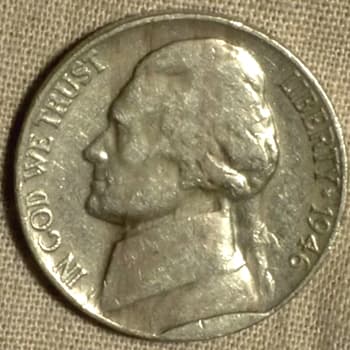
Description
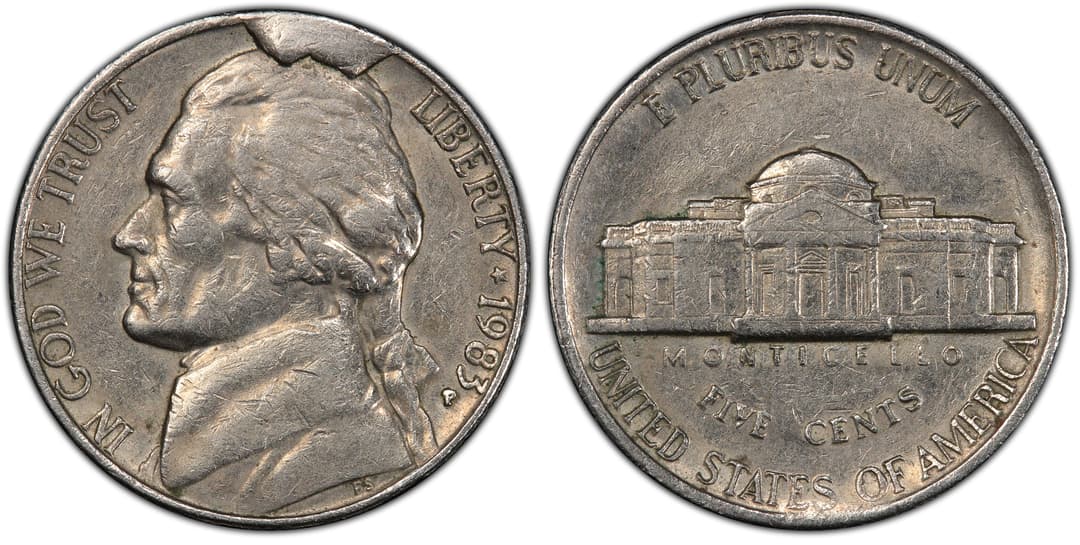
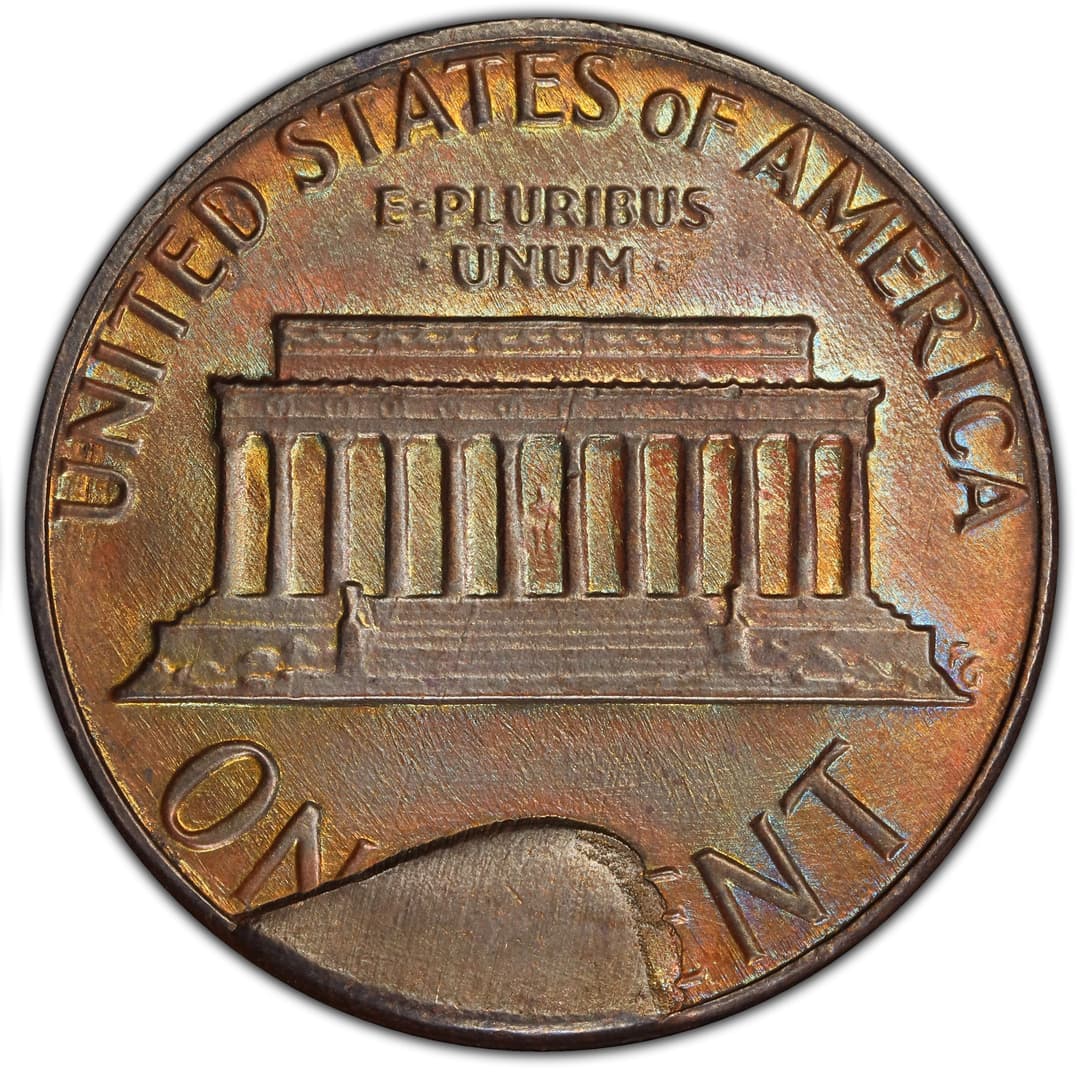
Struck in the first year after the wartime silver alloy was retired, this 1946 Jefferson Nickel carries the first cataloged cud for the date. From 1942 through 1945, five-cent pieces were struck in a special composition of 56% copper, 35% silver, and 9% manganese to conserve nickel for military use during World War II — identifiable by their large mintmark above Monticello's dome. In 1946 the denomination returned to its standard 75% copper and 25% nickel composition, and the mintmark moved back to its pre-war position. A cud forms when a section of the die rim fractures and the broken piece separates entirely, leaving a cavity that fills with metal during striking to produce a raised featureless mass at the coin's edge. The transition back to the standard alloy meant the Mint was working with a composition it had not used for five-cent production in four years, and the retooling to pre-war specifications accompanied a surge in postwar coinage demand. Cataloged by Cuds on Coins, CU-5c-1946-01 documents die rim failure during this transitional moment, preserving evidence of production stress as the Philadelphia Mint scaled up nickel output for a peacetime economy.
Attribution History
- Discovered by Chuck9999 on ebay
- Expert attribution by Cuds on Coins
External References
Community & Reference
Related Errors


More Cud Errors
Collector Essentials
Tools for examining and preserving error coins and die varieties.
10x-20x Jeweler's Loupe
Essential for examining die varieties, doubled dies, and RPMs
Cherry Picker's Guide
The definitive reference for U.S. error coins and die varieties
2x2 Coin Flips & Holders
Protect and organize your finds with archival-quality holders
USB Digital Microscope
Capture detailed images for documentation and community submissions
As an Amazon Associate, NumisDex earns from qualifying purchases.