
RCD-5c-1868-04 Retained Cud
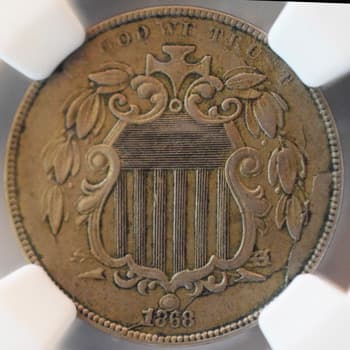
Error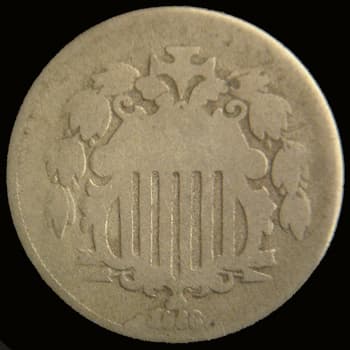
Description
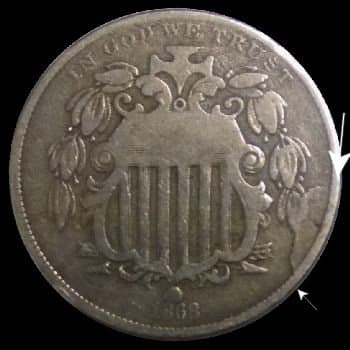
The fourth retained cud cataloged for the 1868 Shield Nickel in the Cuds on Coins reference system, RCD-5c-1868-04 documents a die break at the rim where the fractured piece of die metal remained in place rather than separating entirely. Unlike a full cud — where the broken fragment falls away, leaving a void that fills with planchet metal to create a featureless raised blob — a retained cud keeps the cracked section attached, and the broken area continues to strike coins but produces a distorted, typically sunken zone with altered detail where the fracture line runs. The retained die fragment shifts slightly under repeated striking pressure, creating a distinctive pattern that is neither normal design detail nor the clean absence of a full cud. The 1868 Shield Nickel was struck at the Philadelphia Mint in the hard 75% copper and 25% nickel alloy at 5.0 grams — a composition that imposed significant stress on working dies, contributing to the frequency of die cracks and breaks in this series. James B. Longacre's shield motif obverse and the large numeral 5 within a wreath on the reverse define the design. The catalog code follows Cuds on Coins format: RCD for retained cud, 5c for the nickel denomination, 1868 for the year, and 04 as the sequence number. Examine the rim for the fracture line and distorted zone.
Attribution History
- Discovered by Chuck Newman
- Expert attribution by Cuds on Coins
External References
Community & Reference
Related Errors

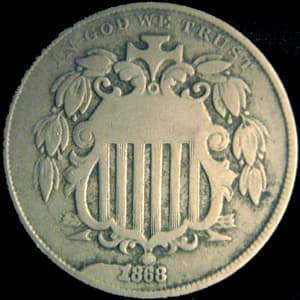
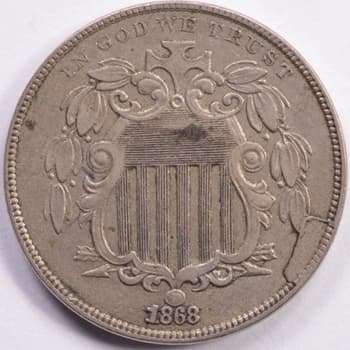
More Retained Cud Errors
Collector Essentials
Tools for examining and preserving error coins and die varieties.
10x-20x Jeweler's Loupe
Essential for examining die varieties, doubled dies, and RPMs
Cherry Picker's Guide
The definitive reference for U.S. error coins and die varieties
2x2 Coin Flips & Holders
Protect and organize your finds with archival-quality holders
USB Digital Microscope
Capture detailed images for documentation and community submissions
As an Amazon Associate, NumisDex earns from qualifying purchases.