
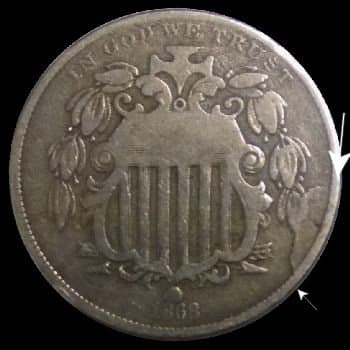
RCD-5c-1868-01 Retained Cud
Error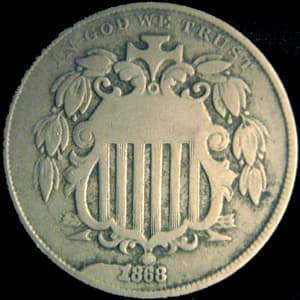
Description
First retained cud variety cataloged for the 1868 Shield Nickel by Cuds on Coins, RCD-5c-1868-01 records a die rim failure during the early years of America's first nickel-alloy five-cent coinage. James B. Longacre's Shield nickel, introduced in 1866, was struck in a challenging 75% copper, 25% nickel alloy that demanded substantially higher striking pressures than the copper, silver, and gold compositions used for all prior U.S. denominations. Philadelphia produced approximately 28.82 million Shield nickels in 1868, the "Without Rays" subtype year after the decorative rays between the reverse stars were removed in 1867 to reduce die breakage — yet as this retained cud demonstrates, die rim failures continued even after the design simplification. A retained cud forms when a section of the die rim cracks and begins to separate but remains physically connected, producing a raised area on struck coins that exhibits both the displacement of the emerging break and residual traces of the original die detail. No additional cross-references from other attribution services exist for this variety. The 1868 date sits at a moment when the Mint was actively refining its approach to nickel coinage: the removal of reverse rays had reduced the opposing high-relief elements that concentrated striking stress, but the inherent hardness of the nickel alloy continued to challenge die longevity. Shield nickels from 1868 display the modified reverse with a large numeral 5 surrounded by thirteen stars without the intervening rays, and the retained cud may appear on either obverse or reverse depending on which die experienced the rim fracture. Collectors should examine the rim area under moderate magnification for the characteristic blend of elevated displacement and partial design retention that defines the retained cud condition, distinguishing it from both full cuds (completely smooth plateau) and simple die cracks (no displacement).
Attribution History
- Discovered by Fred Weinberg
- Expert attribution by Cuds on Coins
External References
Community & Reference
Related Errors

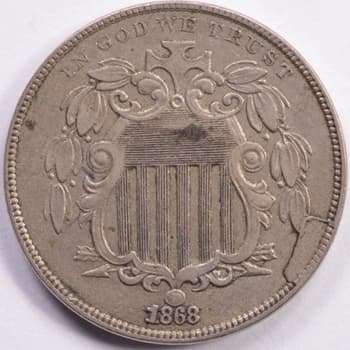
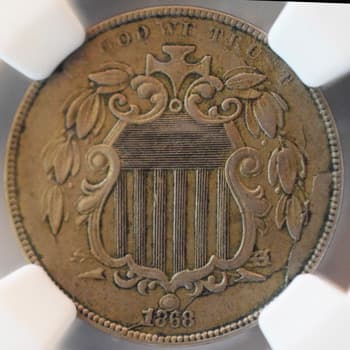
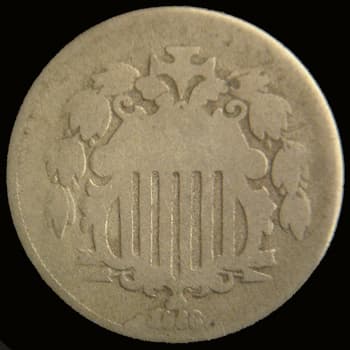
More Retained Cud Errors
Collector Essentials
Tools for examining and preserving error coins and die varieties.
10x-20x Jeweler's Loupe
Essential for examining die varieties, doubled dies, and RPMs
Cherry Picker's Guide
The definitive reference for U.S. error coins and die varieties
2x2 Coin Flips & Holders
Protect and organize your finds with archival-quality holders
USB Digital Microscope
Capture detailed images for documentation and community submissions
As an Amazon Associate, NumisDex earns from qualifying purchases.