
Repunched Mint Marks (RPM): What They Are and How to Find One
RPMEvery Mint Mark Was Punched by Hand
Before 1990, every mint mark on every United States coin was applied by hand. A Mint engraver took a small steel punch — a rod with a raised letter on its tip (D, S, O, W, or CC) — positioned it on the working die, and struck it with a hammer to impress the mint mark into the die face.
If the first punch landed crooked, too high, too low, or at the wrong angle, the engraver repositioned the punch and struck again. But the first impression was already in the die steel. It could not be removed. The result: a doubled, shifted, or overlapping mint mark on every coin struck from that die. That is a Repunched Mint Mark — an RPM.
Why RPMs Exist
The process was entirely manual. No guides, no jigs, no alignment fixtures. The engraver eyeballed the position, set the punch, and hammered. For tens of thousands of dies every year. The margin for error was enormous, and the standard for "close enough" was surprisingly generous. If the mint mark was legible and in roughly the right location, the die went into production — shadow from the first punch and all.
RPMs are a product of human inconsistency applied at industrial scale. The Mint needed dies constantly. Philadelphia manufactured the dies and shipped them to branch mints — Denver, San Francisco, Carson City, New Orleans. Mint marks were punched onto the dies at the branch facilities, or in some periods, at Philadelphia before shipping. Either way, a human hand positioned and struck every single one.
What to Look For
RPMs range from subtle to dramatic. The key is knowing which types of shifts occur and where to look:
- North/South shift — the most common type. The mint mark was punched slightly too high or too low on the first attempt, then corrected. Look for a shadow letter above or below the primary mint mark — the top or bottom of the first punch peeking out from behind the correction.
- East/West shift — the mint mark was punched laterally off-center. A shadow appears to the left or right of the primary letter.
- Tilted (Rotated) repunch — the first punch was rotated at a slight angle before being corrected to vertical. The overlap creates a distinctive "spread" effect at the tips of the letter.
- Triple+ punching — some dies show three or more distinct punch impressions (S/S/S), each at a slightly different position. These multi-punched varieties are among the most dramatic RPMs.
Magnification of 5x to 20x is typically sufficient. On strong RPMs, the doubling is visible to the naked eye on well-struck examples.
Examples from the NumisDex Catalog
1909-S Lincoln Wheat Cent — WRPM-001
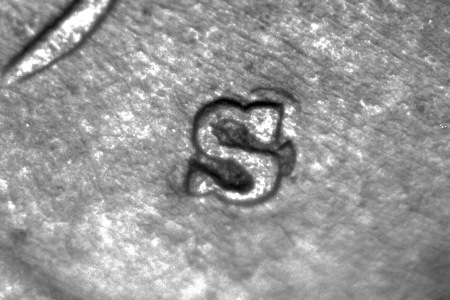
A Top 100 RPM and one of the most dramatic in the Lincoln cent series. The secondary S mint mark is nearly fully visible as a strong horizontal impression beside the primary S. This is a first-year Lincoln cent from San Francisco — the 1909-S is already a key date (mintage 1,825,000), and this RPM variety adds another layer of collectibility. Listed in Breen, CONECA, Cherrypickers, and Coppercoins references.
1942-D Jefferson Nickel — WRPM-001
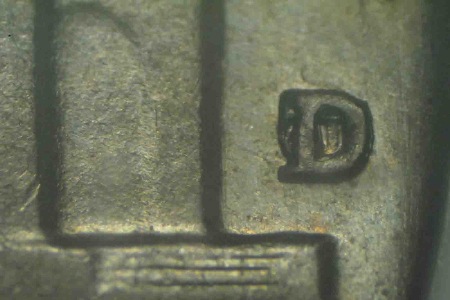
D/Horizontal D — the primary D sits over a clearly horizontal first impression. This is CONECA RPM #1 and a Cherrypickers-listed variety (FS-05-1942D-501). The 1942-D Jefferson nickel was produced during wartime, when production pressures made quality control on die preparation less rigorous. The dramatic horizontal shift makes this one of the most recognizable RPMs in the Jefferson nickel series.
1946-S Jefferson Nickel — WRPM-001
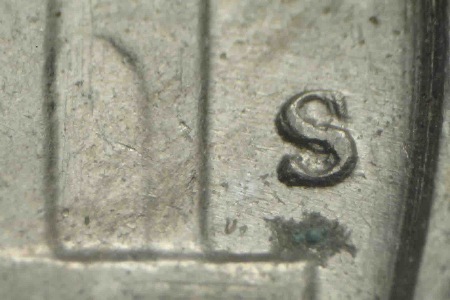
A post-war S/S repunch, CONECA RPM #2. The 1946-S was the first San Francisco Jefferson nickel struck after the wartime silver alloy period ended and the mint mark moved back to its standard position on the reverse. The transition back to peacetime production brought its own quality control inconsistencies, and 1946-S RPMs are widely collected as a group.
1879-S Morgan Dollar — WRPM-001
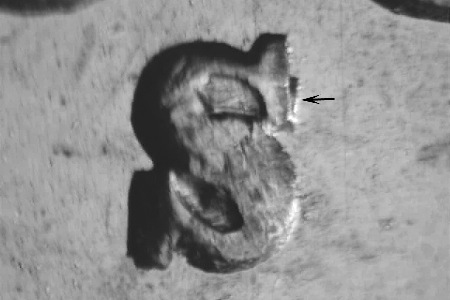
S/S Southeast on a Morgan Dollar — the large flan of the silver dollar makes the repunching easier to study under magnification. This variety is cross-referenced with multiple VAM die pairings (VAM #15, #17, #54, #114) and CONECA RPM #3. Morgan Dollar RPMs are collected alongside the well-established VAM attribution system, giving collectors two frameworks for identifying the same die characteristics.
1913-D Buffalo Nickel — WRPM-001
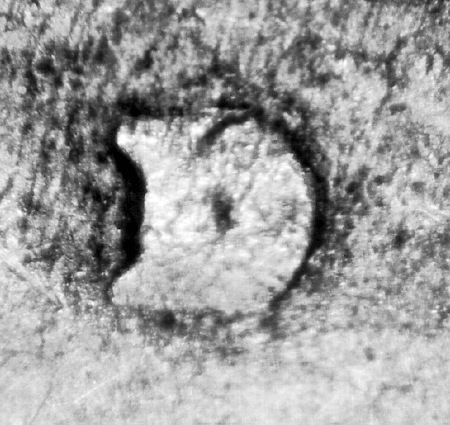
D/D Northwest on a first-year Buffalo Nickel. James Earle Fraser's iconic design debuted in 1913, and this Denver Mint specimen shows the D mint mark punched twice with a northwest shift. Buffalo Nickel mint marks are located on the reverse beneath FIVE CENTS (Type 2) — a position that wore quickly in circulation, making well-preserved RPMs on this series particularly valued.
The 1990 Cutoff
In 1990, the United States Mint changed its process. Instead of hand-punching mint marks onto individual working dies, the mint mark was incorporated directly into the master hub. Every die made from that hub automatically carried the correct mint mark in the correct position. No hand-punching. No human variation. No more RPMs.
Pre-1990 coins can have RPMs. Post-1990 coins cannot. The error type has a hard cutoff date — one of the few categories in numismatics with a definitive "last possible year." Every RPM that exists or will ever be discovered is from 1989 or earlier.
This is why RPMs are entirely a product of the era before modern die manufacturing. They are historical artifacts of a handmade process that no longer exists.
RPM vs. Doubled Die vs. Machine Doubling
Collectors sometimes confuse RPMs with doubled dies or machine doubling. The distinctions are important:
- RPM (Repunched Mint Mark): Only the mint mark is affected. The rest of the coin's design is normal. The doubling comes from the mint mark punch being applied twice to the die.
- Doubled Die (DDO/DDR): The entire design, or a large section of it, is doubled because the hub impressed the die twice at slightly different positions. Affects lettering, dates, portraits — everything in the doubled zone. Browse our DDO and DDR listings.
- Machine Doubling (MD): A flat, shelf-like doubling caused by die bounce during striking. Affects the whole coin. Not a die variety — it is a striking artifact. Machine doubling has no collector premium.
The diagnostic: if only the mint mark is doubled and everything else looks normal, you are looking at an RPM. If the date, lettering, or portrait is also doubled, it is something else.
Related Error Types
- Over Mint Mark (OMM): A special case where one mint mark letter was punched over a different letter entirely — a D over an S, for example, when a die intended for one branch mint was reassigned. OMMs are technically a separate error category but live in the same hub/punch family as RPMs. Browse our OMM listings.
- Repunched Date (RPD): The same concept applied to the date digits rather than the mint mark. A "1" punched over a "1" at a different angle is an RPD. Browse our RPD listings.
- Overdate (OVD): A different digit punched over an existing date digit — an "8" over a "7," for example. The mint mark equivalent of an overdate is an OMM. Read more in our overdate guide.
Collecting RPMs
RPMs span nearly every denomination struck at a branch mint before 1990. Lincoln cents (both wheat and memorial), Jefferson nickels, Buffalo nickels, Mercury dimes, Roosevelt dimes, Washington quarters, Kennedy half dollars, and Morgan dollars all have well-documented RPM populations. The NumisDex catalog includes over 2,800 RPM listings across these series.
RPMs are one of the most accessible entry points into die variety collecting. Many are affordable (especially common Lincoln cent and Jefferson nickel RPMs), visible with modest magnification, and well-documented through the Wexler, CONECA, and Cherrypickers attribution systems. Starting with a single series — such as Jefferson nickel RPMs from the 1940s-1960s — is a practical way to build familiarity with the error type before expanding to other denominations.
Browse all RPM listings in the NumisDex catalog.
Related Reading
- Overdates: When Yesterday's Date Won't Let Go — the hub/punch cousin of the RPM, where one date digit was punched over another
- Broadstrike Errors: When the Collar Fails — a different class of Mint error caused by missing or malfunctioning collar dies
- Strike Through Errors: When the Mint's Factory Floor Leaves Its Mark — foreign material caught between die and planchet during striking
- Wrong Planchet Errors: When a Coin Gets Struck on the Wrong Metal — among the most dramatic Mint errors, when the wrong blank enters the press