
Capped Bust to Right Eagles 1795-1804
Coin Series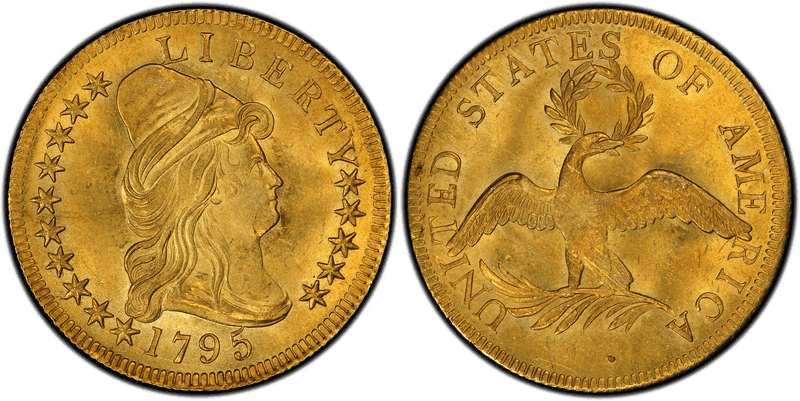
About This Series
As the first ten-dollar gold coins struck by the United States Mint, Capped Bust to Right eagles held the distinction of being the largest denomination in regular American coinage when production began in 1795. Robert Scot's design pairs a Liberty portrait wearing a conical cap with two reverse types: the Small Eagle (1795-1797), featuring a delicate bird perched on a palm branch within a wreath, and the imposing Heraldic Eagle (1797-1804) displaying the Great Seal motif. The 1795 issue includes the celebrated 9 Leaves and 13 Leaves palm frond varieties, which serve as the primary die diagnostic for the earliest eagle production. Production ceased entirely after 1804 because eagles were being exported to Europe and melted for their gold content — the coins' face value was lower than their bullion value at prevailing exchange rates, making them profitable for international speculators to extract from domestic circulation. No eagles were struck again until 1838, a 34-year hiatus representing the longest gap in any major U.S. denomination. Struck in .9167 fine gold at 17.50 grams on a 33mm planchet, these coins carried enormous purchasing power. The Bass-Dannreuther reference provides definitive die variety coverage, and the series' combination of historical significance and genuine rarity makes it a pinnacle pursuit for gold collectors.
Series Information
Browse by Base(9 bases)
1795 Capped Bust to Right Eagle
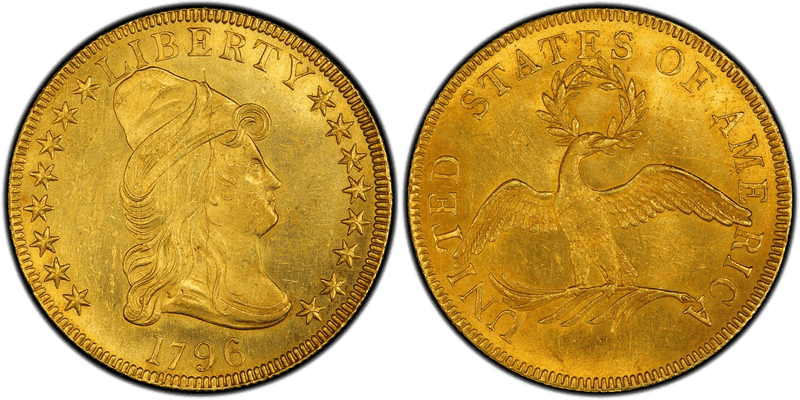
1796 Capped Bust to Right Eagle
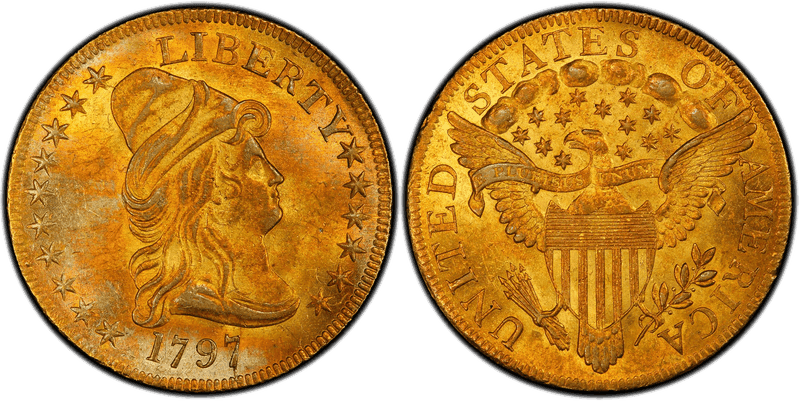
1797 Capped Bust to Right Eagle
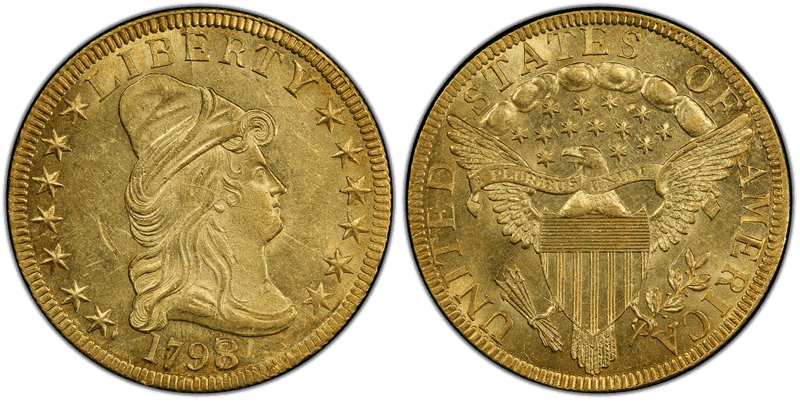
1798 Capped Bust to Right Eagle
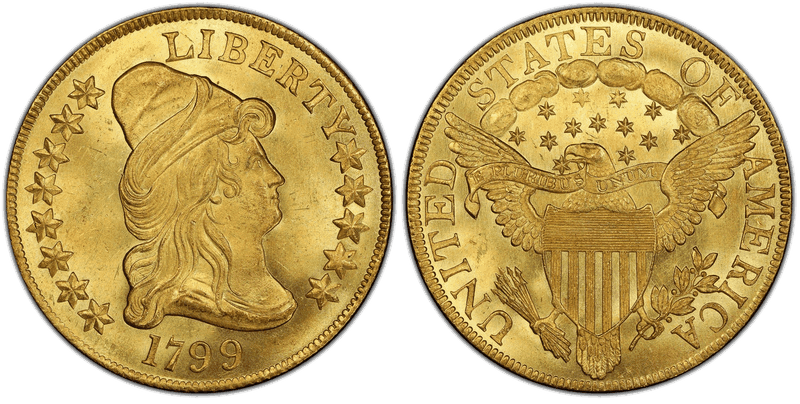
1799 Capped Bust to Right Eagle
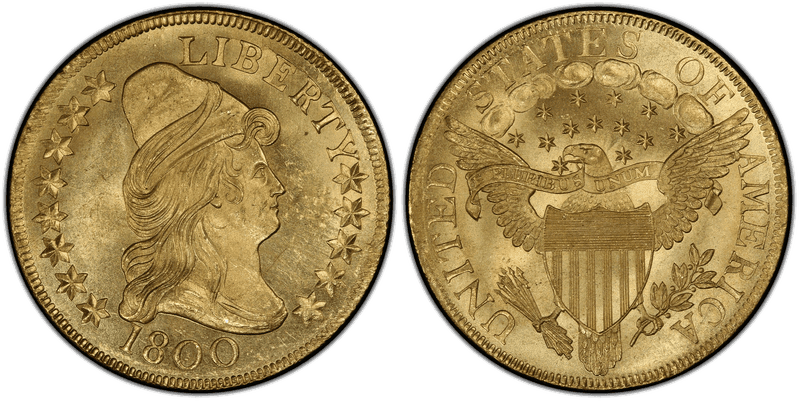
1800 Capped Bust to Right Eagle
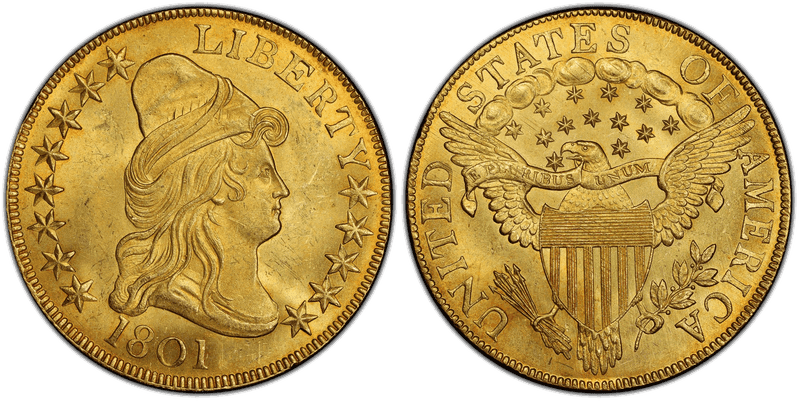
1801 Capped Bust to Right Eagle
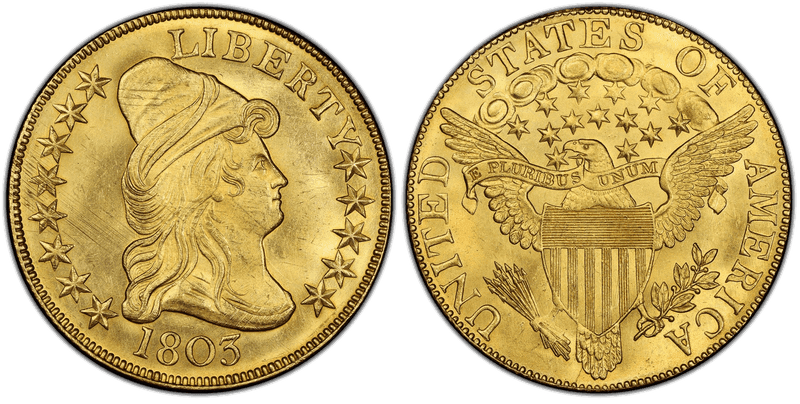
1803 Capped Bust to Right Eagle
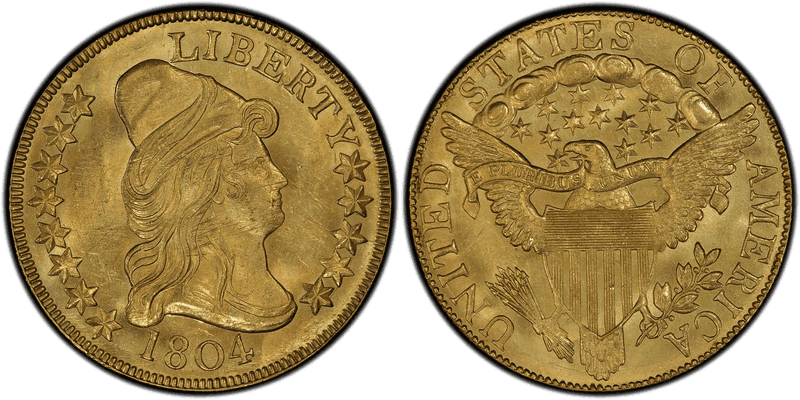
1804 Capped Bust to Right Eagle
Explore Other Denominations
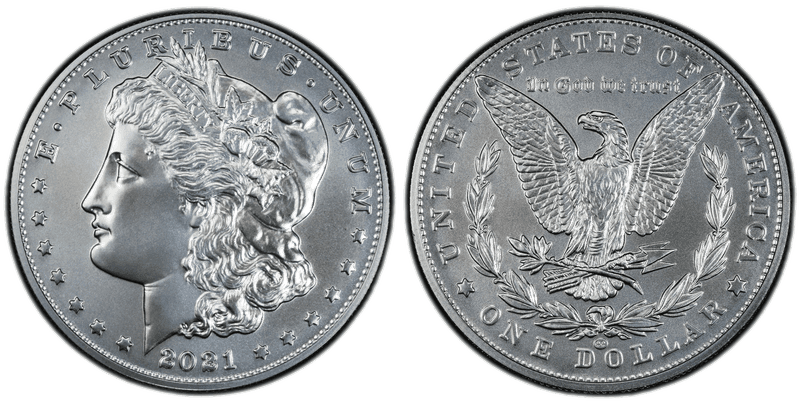
1921 Silver Dollar Anniversary Coins (2021 to Date)
10 base coins
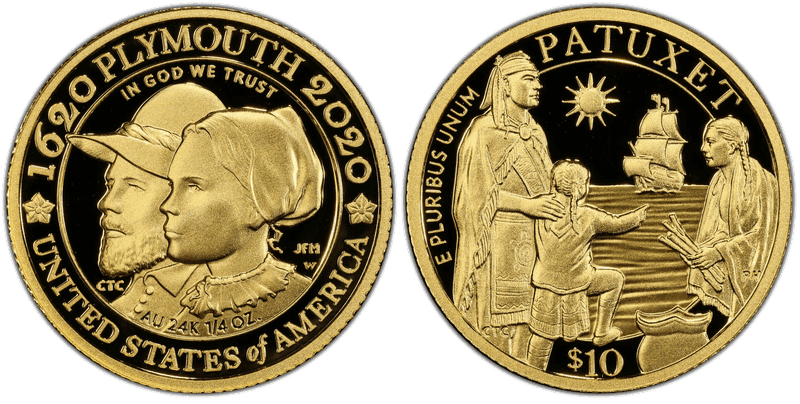
400th Mayflower Anniversary Ten Dollar Gold 2020
1 base coin
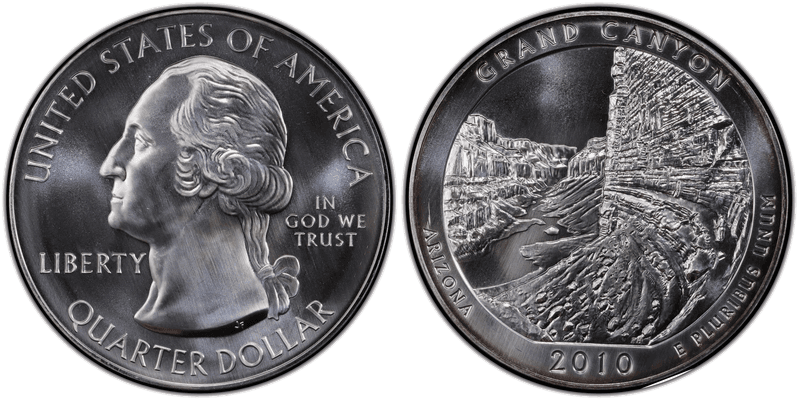
5 oz. America the Beautiful Silver Quarters 2010-2021
12 base coins
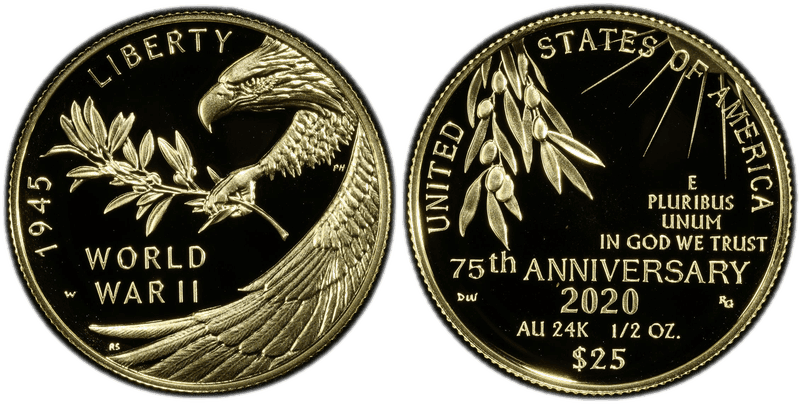
75th World War II Anniversary Twenty Five Dollar Gold 2020
1 base coin
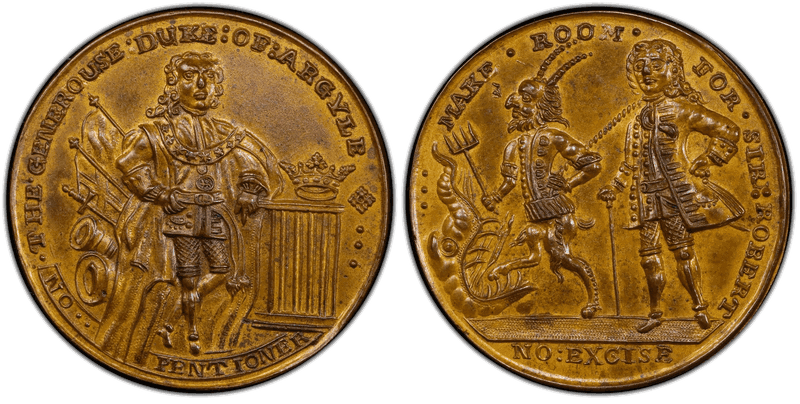
Admiral Vernon Medals
5 base coins
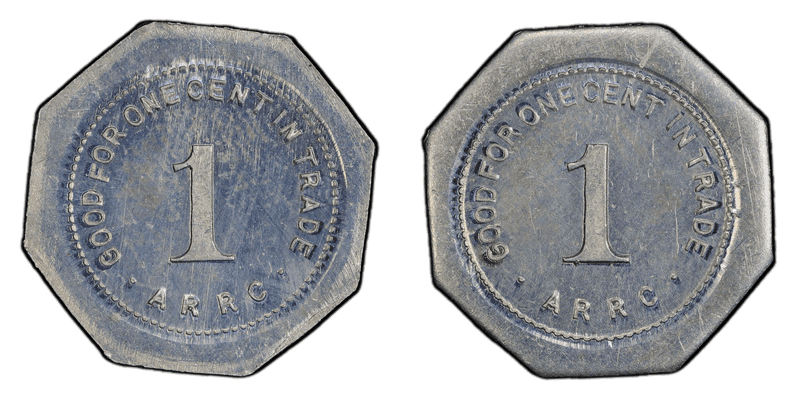
Alaska Rural Rehabilitation Corp. (1935)
1 base coin
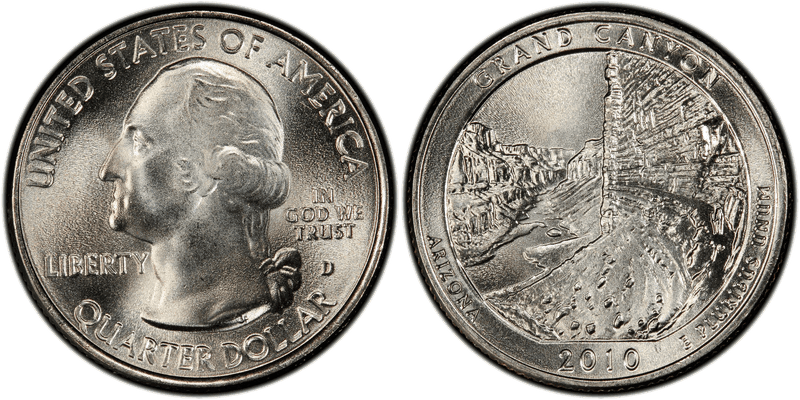
America the Beautiful Quarters 2010-2021
12 base coins
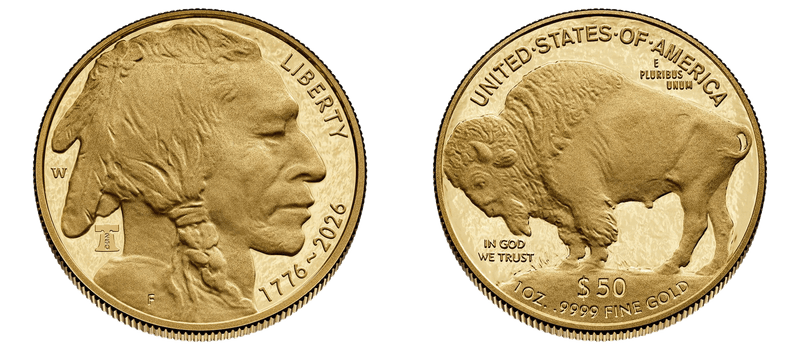
American Buffalo Gold 2006 to Date
21 base coins
Collector Essentials
Tools and references for building and protecting your coin collection.
10x-20x Jeweler's Loupe
A must-have for examining coin details, mint marks, and surface quality
Red Book — Guide to U.S. Coins
The essential annual reference for U.S. coin values, history, and mintages
Coin Albums & Storage
Archival-quality albums and holders to protect and display your collection
USB Digital Microscope
Capture detailed images for documentation and community submissions
As an Amazon Associate, NumisDex earns from qualifying purchases.