
1993D-1DER-017WS Trail Die Reverse
Error
Description
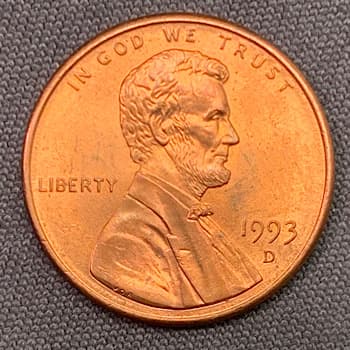
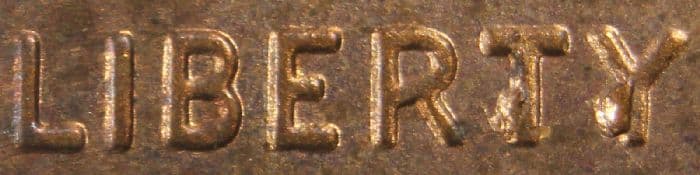
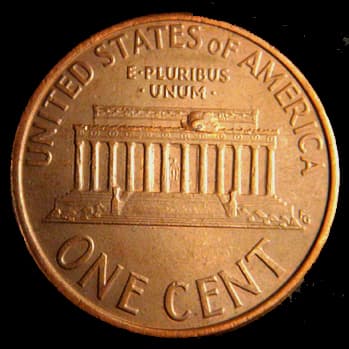
Severe die deterioration dominates the 017WS — Jeremy Gardner's second contribution to the census — making it a study in how far a die can degrade before retirement. A bi-level die crack runs from the period behind UNUM to the Memorial roof, accompanied by a die chip at the junction. The term "bi-level" describes a crack propagating at two different elevations within the steel, producing a stepped fracture that appears on the struck coin as a raised line with a visible shelf along its length — a more advanced failure than a simple planar crack, indicating fracture along two distinct cleavage planes. Multiple cracks and chips also appear in columns 4 and 5, and a large die chip has broken from the cornice under the M of UNUM. The trail die effect shows moderate step deviation under columns 5, 6, 7, and 8 with emphasis on the left side, offset at 180 degrees. At Stage C late die state, the obverse carries no observed markers, meaning all dramatic deterioration concentrated on the reverse — consistent with the reverse die bearing the brunt of the seating instability that created the trail die condition. Struck at Denver on copper-plated zinc planchets, 2.5 grams, 19mm, plain edge.
Attribution History
- Discovered by Jeremy Gardner
- Expert attribution by Trail Dies
External References
Community & Reference
Related Errors


More Trail Die Reverse Errors


Collector Essentials
Tools for examining and preserving error coins and die varieties.
10x-20x Jeweler's Loupe
Essential for examining die varieties, doubled dies, and RPMs
Cherry Picker's Guide
The definitive reference for U.S. error coins and die varieties
2x2 Coin Flips & Holders
Protect and organize your finds with archival-quality holders
USB Digital Microscope
Capture detailed images for documentation and community submissions
As an Amazon Associate, NumisDex earns from qualifying purchases.