
1992 Typical Die Clash TDC-1C-1992-01
Error
Description
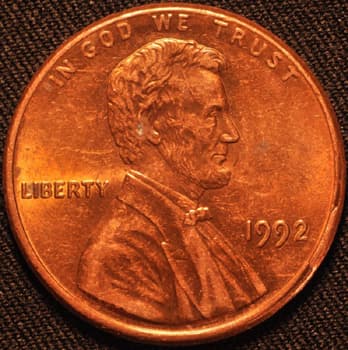
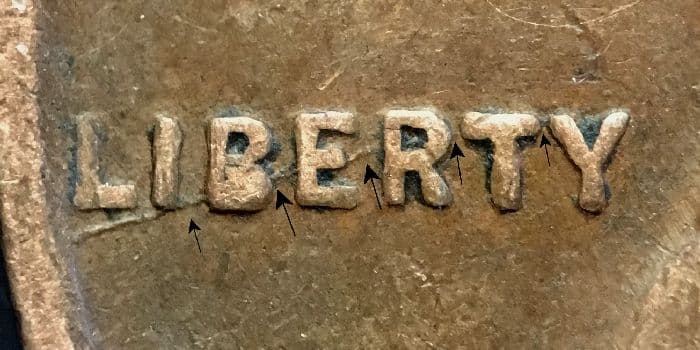
An unusual geometry sets TDC-1C-1992-01 apart from routine die clashes: one or both dies were tilted when they met without a planchet, concentrating all clash evidence on a single side of the coin rather than distributing it symmetrically. Most die clashes produce roughly centered, mirror-image impressions because the dies meet face-to-face in their normal parallel alignment, but when a die tilts during the unobstructed strike, the contact zone shifts to the side of the die that angles inward, leaving the opposite side untouched. On this 1992 Philadelphia Lincoln cent, the reverse absorbed the stronger clash impression while the obverse shows comparatively weaker marks, yet both affected areas were left unabraded — the Mint did not grind the die surfaces to remove the clash evidence before returning the dies to service. The fact that the clash marks survive without abrasion suggests either the Mint inspectors did not detect the clash, or the die was pulled from service before corrective polishing could be performed. For clash specialists, the one-sided distribution is the key diagnostic: where a normal clash produces paired evidence on both faces in roughly corresponding positions, this tilted clash concentrates the evidence asymmetrically. Struck at Philadelphia on copper-plated zinc planchets, 2.5 grams, 19mm, plain edge.
External References
Community & Reference
Related Errors



More Typical Die Clash Errors



Collector Essentials
Tools for examining and preserving error coins and die varieties.
10x-20x Jeweler's Loupe
Essential for examining die varieties, doubled dies, and RPMs
Cherry Picker's Guide
The definitive reference for U.S. error coins and die varieties
2x2 Coin Flips & Holders
Protect and organize your finds with archival-quality holders
USB Digital Microscope
Capture detailed images for documentation and community submissions
As an Amazon Associate, NumisDex earns from qualifying purchases.