
1972 Variety WMDO-001
Error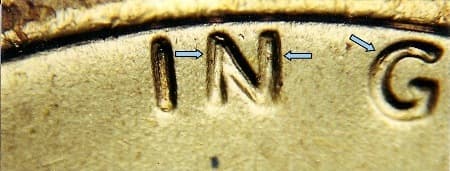
Description
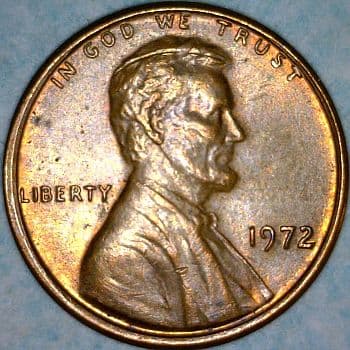
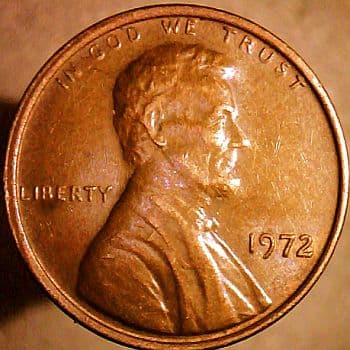
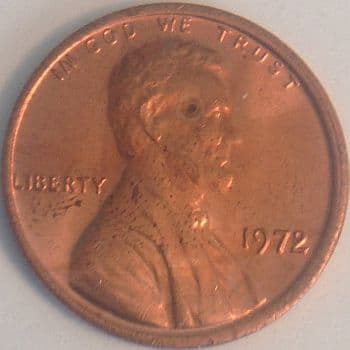
The 1972 Lincoln cent Master Die Doubling Obverse — cataloged as WMDO-001 by the Wexler attribution system, formerly listed by CONECA as MD-1-O-I-CW+II-C and MD-5-O-I-CW+II-C, and cross-referenced as Crawford CDDO-005 (MD) — represents one of the most important educational entries in the entire Lincoln Memorial cent error catalog. This is NOT a rare or valuable variety: it is the extremely common master die doubling that affects an estimated 60% to 70% of ALL 1972 Lincoln cents produced at all three mints (Philadelphia, Denver, and San Francisco, including proofs). The doubling presents as an extremely close Class I clockwise spread visible on the letters of LIBERTY, the letters of IN GOD WE TRUST, and the horizontal bar of the "2" in the date. On early die state specimens, the E of WE appears to show tripling, suggesting a counterclockwise spread component in addition to the primary clockwise spread. The sole die marker specific to the master die itself — as opposed to markers on individual working dies — is a short die gouge extending eastward inside the upper S of TRUST. All other obverse and reverse die markers vary among the many different working dies that descended from the affected master die, since dozens (possibly hundreds) of working dies were produced from this single doubled master die over the course of the 1972 production year. The historical context is essential for understanding this variety: shortly after the various obverse doubled die cent varieties were produced in early 1972 — the famous WDDO-001 through WDDO-026 series — the Lincoln cent master die for 1972 failed and a replacement had to be produced. The Mint was clearly experiencing persistent problems with the hubbing process that year, as evidenced by the extraordinary number of doubled die varieties created. Those problems carried over to the production of the second master die, which received minor doubling during its own hubbing. It is estimated that this doubled master die was created somewhere around April or May of 1972. All Lincoln cents struck by working dies descended from this doubled master die show the minor doubling — creating an enormous population of affected coins. Because 60% to 70% of all 1972 Lincoln cents display this master die doubling, it is far too common to carry any numismatic premium. Collectors should not pay more than the normal numismatic value of a 1972 cent for specimens showing only this master die doubling. WARNING TO NEWER COLLECTORS: There are individuals who advertise 1972 "doubled die" Lincoln cents at inflated prices, sometimes listing them under designations like "5-O-I+II" while deliberately omitting the "MD" (Master Die) prefix that would correctly identify the doubling as the common master die variety rather than a scarce working die doubled die. Any 1972 cent offered as a "doubled die" should be carefully evaluated — if the doubling appears only as extremely close separation on LIBERTY and IGWT letters without dramatic spread visible to the naked eye, it is almost certainly this master die doubling with no premium value. The genuine scarce doubled dies (WDDO-001 through WDDO-026) show significantly stronger, more obvious doubling that is clearly distinct from the subtle master die spread.
Attribution History
- Discovered by John A. Wexler Cross References: CONECA: formerly listed as MD-1-O-I-CW+II-C and MD-5-O-I-CW+II-C, Crawford: CDDO-005 (MD) Values: No extra value Comments: Shortly after the various obverse doubled die cent varieties were produced that year, the Lincoln cent master die for 1972 failed and a new one had to be produced. Clearly the Mint was having problems that year with the hubbing process as was evidenced by the many doubled die varieties produced. Those problems carried over to the second master die that was produced for the Lincoln cents that year. That second master die was produced with minor doubling. It is estimated that the doubled master die was created somewhere around April or May of 1972. All of the Lincoln cents struck by working dies that descended from the doubled master die show this minor doubling. The doubling can be seen on the letters of IGWT, the letters of LIBERTY, and very slightly on the date. Since 60% to 70% of all Lincoln cents for 1972 show this doubling, it is far too common to have any value. This includes 1972 D-Mint, S-Mint, and proof coins produced that year. Newer doubled die collectors should be very careful if responding to ads for 1972 doubled die Lincoln cents. There are individuals out there trying to sell specimens of this doubled master die for premiums far in excess of what they should be. You should not be paying more than the normal numismatic value of a 1972 cent for 1972 cents with this master die doubling. Those trying to sell them to unsuspecting buyers advertise them as “genuine doubled dies” which they are. The ads are truthful in that respect, but they fail to tell you that it is a specimen of the doubled master die that can easily be found without paying a premium for it. Back when they were first listed they were assigned a listing number of 1972 1¢ MD-5-O-I+II. Those trying to sell them at a premium identify them as “5-O-I+II” but they leave off the master die indicator “MD.” If you are fairly new to doubled die collecting, don’t let yourself fall victim to these scams. If you would like to add a specimen of the doubled master die to your collection for educational purposes, go out and look for them yourself. Since the majority of 1972 cents show this doubling, you should easily find one for the cost of a “regular” 1972 Lincoln cent.
- CONECA: formerly listed as MD-1-O-I-CW+II-C and MD-5-O-I-CW+II-C, Crawford: CDDO-005 (MD) Values: No extra value Comments: Shortly after the various obverse doubled die cent varieties were produced that year, the Lincoln cent master die for 1972 failed and a new one had to be produced. Clearly the Mint was having problems that year with the hubbing process as was evidenced by the many doubled die varieties produced. Those problems carried over to the second master die that was produced for the Lincoln cents that year. That second master die was produced with minor doubling. It is estimated that the doubled master die was created somewhere around April or May of 1972. All of the Lincoln cents struck by working dies that descended from the doubled master die show this minor doubling. The doubling can be seen on the letters of IGWT, the letters of LIBERTY, and very slightly on the date. Since 60% to 70% of all Lincoln cents for 1972 show this doubling, it is far too common to have any value. This includes 1972 D-Mint, S-Mint, and proof coins produced that year. Newer doubled die collectors should be very careful if responding to ads for 1972 doubled die Lincoln cents. There are individuals out there trying to sell specimens of this doubled master die for premiums far in excess of what they should be. You should not be paying more than the normal numismatic value of a 1972 cent for 1972 cents with this master die doubling. Those trying to sell them to unsuspecting buyers advertise them as “genuine doubled dies” which they are. The ads are truthful in that respect, but they fail to tell you that it is a specimen of the doubled master die that can easily be found without paying a premium for it. Back when they were first listed they were assigned a listing number of 1972 1¢ MD-5-O-I+II. Those trying to sell them at a premium identify them as “5-O-I+II” but they leave off the master die indicator “MD.” If you are fairly new to doubled die collecting, don’t let yourself fall victim to these scams. If you would like to add a specimen of the doubled master die to your collection for educational purposes, go out and look for them yourself. Since the majority of 1972 cents show this doubling, you should easily find one for the cost of a “regular” 1972 Lincoln cent.; Wexler Variety ID: 1972 1¢ WMDO-001
- Expert attribution by Wexler Team
External References
Community & Reference
Related Errors


More Master Die Doubling Obverse Errors


Collector Essentials
Tools for examining and preserving error coins and die varieties.
10x-20x Jeweler's Loupe
Essential for examining die varieties, doubled dies, and RPMs
Cherry Picker's Guide
The definitive reference for U.S. error coins and die varieties
2x2 Coin Flips & Holders
Protect and organize your finds with archival-quality holders
USB Digital Microscope
Capture detailed images for documentation and community submissions
As an Amazon Associate, NumisDex earns from qualifying purchases.