
1972-D Variety WMDO-001
Error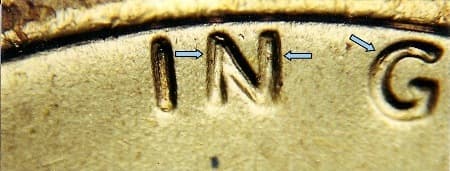
Description
Classified as WMDO-001, this variety documents the master die doubling that affects an estimated 60-70% of all 1972 Lincoln cents regardless of mint facility — appearing on Philadelphia, Denver, and San Francisco coins alike because the doubling originated on the master die itself rather than on individual working dies. This is NOT a rare variety and carries NO extra value despite its dramatic visual appearance showing an extremely close Class I clockwise spread on the letters of LIBERTY, IN GOD WE TRUST, and the horizontal bar of the 2 in the date. On early die state specimens, the E of WE appears to show tripling suggesting a counterclockwise spread in addition to the primary clockwise spread — a nuance that adds complexity to the master die's failure history. The affected master die shows a short die gouge extending eastward inside the upper S of TRUST as its identifying marker, though other obverse and reverse die markers will vary with the different working dies affected since scores of working dies were produced from this doubled master before the problem was identified. The Wexler Team has extensively documented this master die failure, warning collectors that unscrupulous sellers frequently market these common coins at significant premiums by describing them as "doubled dies" without disclosing their master die origin. The old listing number MD-5-O-I+II records this variety in earlier attribution systems. Historical research indicates the first master die failed around April-May 1972, and the second master die put into service inherited the doubled impression, which then propagated to the majority of working dies manufactured for the remainder of 1972 cent production across all three mint facilities. Because master die doubling is inherited by working dies rather than created on them individually, it affects entire populations of coins rather than the single-die production runs that characterize genuine doubled dies like WDDO-001 through WDDO-005 — a fundamental distinction that explains why WMDO-001 specimens are common enough to carry no numismatic premium while the working-die doubled dies command values from $10 to $75 depending on variety and grade.
Attribution History
- Discovered by John A. Wexler Cross References: None known Values: No extra value Comments: Shortly after the various obverse doubled die cent varieties were produced that year, the Lincoln cent master die for 1972 failed and a new one had to be produced. Clearly the Mint was having problems that year with the hubbing process as was evidenced by the many doubled die varieties produced. Those problems carried over to the second master die that was produced for the Lincoln cents that year. That second master die was produced with minor doubling. It is estimated that the doubled master die was created somewhere around April or May of 1972. All of the Lincoln cents struck by working dies that descended from the doubled master die show this minor doubling. The doubling can be seen on the letters of IGWT, the letters of LIBERTY, and very slightly on the date. Since 60% to 70% of all Lincoln cents for 1972 show this doubling, it is far too common to have any value. This includes 1972 P-Mint, S-Mint, and proof coins produced that year. Newer doubled die collectors should be very careful if responding to ads for 1972 doubled die Lincoln cents. There are individuals out there trying to sell specimens of this doubled master die for premiums far in excess of what they should be. You should not be paying more than the normal numismatic value of a 1972 cent for 1972 cents with this master die doubling. Those trying to sell them to unsuspecting buyers advertise them as “genuine doubled dies” which they are. The ads are truthful in that respect, but they fail to tell you that it is a specimen of the doubled master die that can easily be found without paying a premium for it. Back when they were first listed they were assigned a listing number of 1972 1¢ MD-5-O-I+II. Those trying to sell them at a premium identify them as “5-O-I+II” but they leave off the master die indicator “MD.” If you are fairly new to doubled die collecting, don’t let yourself fall victim to these scams. If you would like to add a specimen of the doubled master die to your collection for educational purposes, go out and look for them yourself. Since the majority of 1972 cents show this doubling, you should easily find one for the cost of a “regular” 1972 Lincoln cent.
- None known Values: No extra value Comments: Shortly after the various obverse doubled die cent varieties were produced that year, the Lincoln cent master die for 1972 failed and a new one had to be produced. Clearly the Mint was having problems that year with the hubbing process as was evidenced by the many doubled die varieties produced. Those problems carried over to the second master die that was produced for the Lincoln cents that year. That second master die was produced with minor doubling. It is estimated that the doubled master die was created somewhere around April or May of 1972. All of the Lincoln cents struck by working dies that descended from the doubled master die show this minor doubling. The doubling can be seen on the letters of IGWT, the letters of LIBERTY, and very slightly on the date. Since 60% to 70% of all Lincoln cents for 1972 show this doubling, it is far too common to have any value. This includes 1972 P-Mint, S-Mint, and proof coins produced that year. Newer doubled die collectors should be very careful if responding to ads for 1972 doubled die Lincoln cents. There are individuals out there trying to sell specimens of this doubled master die for premiums far in excess of what they should be. You should not be paying more than the normal numismatic value of a 1972 cent for 1972 cents with this master die doubling. Those trying to sell them to unsuspecting buyers advertise them as “genuine doubled dies” which they are. The ads are truthful in that respect, but they fail to tell you that it is a specimen of the doubled master die that can easily be found without paying a premium for it. Back when they were first listed they were assigned a listing number of 1972 1¢ MD-5-O-I+II. Those trying to sell them at a premium identify them as “5-O-I+II” but they leave off the master die indicator “MD.” If you are fairly new to doubled die collecting, don’t let yourself fall victim to these scams. If you would like to add a specimen of the doubled master die to your collection for educational purposes, go out and look for them yourself. Since the majority of 1972 cents show this doubling, you should easily find one for the cost of a “regular” 1972 Lincoln cent.; Wexler Variety ID: 1972-D 1¢ WMDO-001
- Expert attribution by Wexler Team
External References
Community & Reference
Related Errors
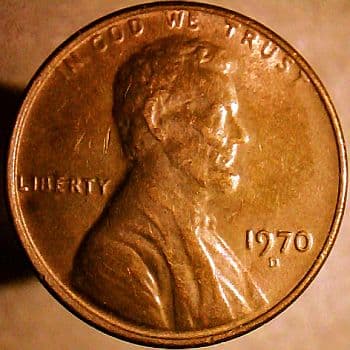

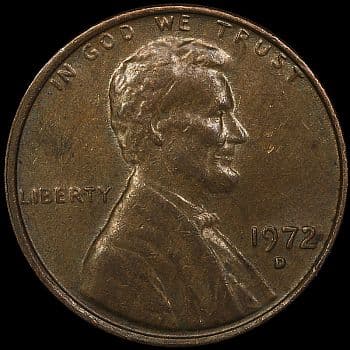
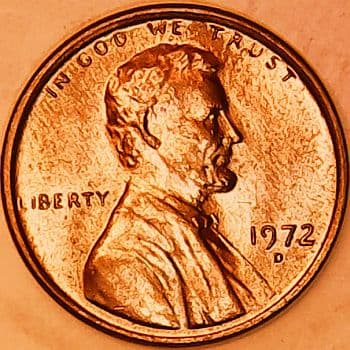

More Master Die Doubling Obverse Errors


Collector Essentials
Tools for examining and preserving error coins and die varieties.
10x-20x Jeweler's Loupe
Essential for examining die varieties, doubled dies, and RPMs
Cherry Picker's Guide
The definitive reference for U.S. error coins and die varieties
2x2 Coin Flips & Holders
Protect and organize your finds with archival-quality holders
USB Digital Microscope
Capture detailed images for documentation and community submissions
As an Amazon Associate, NumisDex earns from qualifying purchases.