
RCD-1c-1951-03R Retained Cud
Error
Description
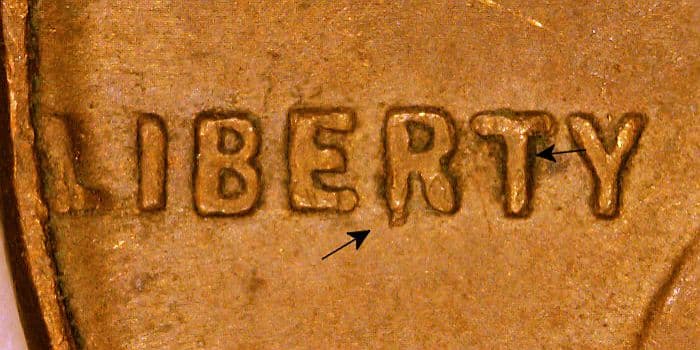
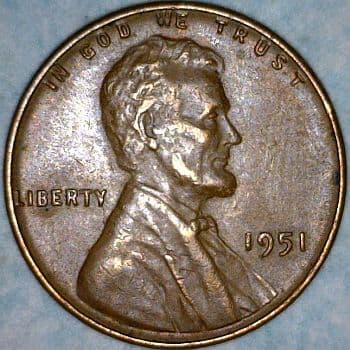
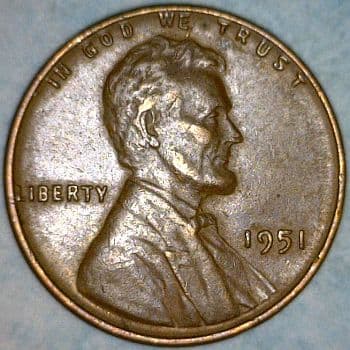
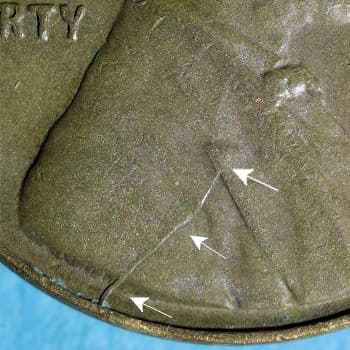
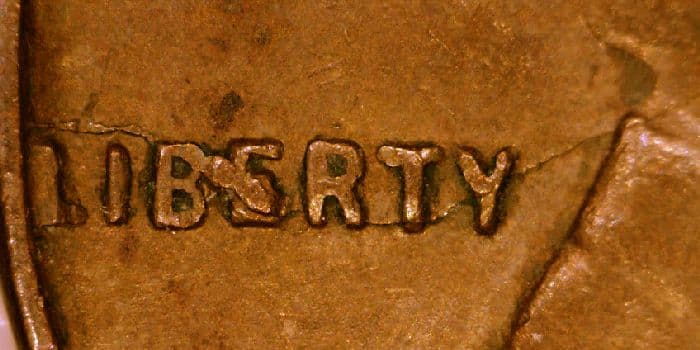
Documented as the third reverse retained cud for the 1951 Lincoln wheat cent, RCD-1c-1951-03R captures another instance of die rim failure during the early 1950s production era. Philadelphia struck approximately 284.6 million cents in 1951, a moderate production year by Lincoln cent standards that nonetheless required substantial die inventories to complete. The retained cud designation indicates that a reverse die developed a crack originating at the rim — the zone of maximum striking stress — that progressed inward through the design area far enough to partially separate a fragment of die steel. During subsequent strikes, this fractured section shifted under the tremendous pressure of coining, creating a raised and slightly distorted zone on the reverse of struck coins where Victor David Brenner's wheat ear design appears displaced from its normal position. The distinction between a retained cud and a full cud is structural: in a retained cud, the broken die piece remains physically connected to the die body, producing a shifted but still partially recognizable design impression; in a full cud, the fragment separates entirely, leaving a void in the die that fills with planchet metal during striking and creates a featureless raised blob on the coin. Three documented reverse retained cuds for 1951 indicate that multiple reverse dies experienced this intermediate stage of failure during the year's production campaign. The wheat reverse design (1909-1958), with its paired grain stalks flanking the denomination and motto, provides the backdrop against which these die failures manifest, and the specific position of each retained cud along the rim determines which design elements are affected. Collectors should examine the reverse rim systematically under 5-10x magnification, looking for raised zones where the design transitions abruptly from normal to shifted alignment.
Attribution History
- Discovered by Chuck Newman
- Expert attribution by Cuds on Coins
External References
Community & Reference
Related Errors
More Retained Cud Errors
Collector Essentials
Tools for examining and preserving error coins and die varieties.
10x-20x Jeweler's Loupe
Essential for examining die varieties, doubled dies, and RPMs
Cherry Picker's Guide
The definitive reference for U.S. error coins and die varieties
2x2 Coin Flips & Holders
Protect and organize your finds with archival-quality holders
USB Digital Microscope
Capture detailed images for documentation and community submissions
As an Amazon Associate, NumisDex earns from qualifying purchases.