
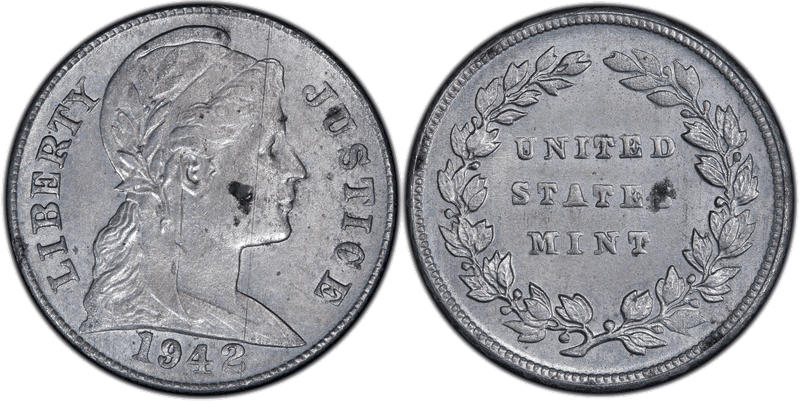
1942 Cent Pattern - J-2055, Manganese
Strike TypeCoin Details
Description
Judd-2055, Pollock-2245, is a manganese alloy cent pattern from the 1942 wartime testing program. Manganese was already familiar to the Mint as a coinage metal — it had been used in the nickel alloy for the five-cent piece since 1866 and would be incorporated into the wartime "silver" nickels of 1942-1945 (which contained 56% copper, 35% silver, and 9% manganese). For the cent, a manganese-heavy alloy offered hardness and durability superior to pure zinc or aluminum, though its dark grey-brown color was distinctly different from the warm copper tones Americans associated with the penny. Manganese's strategic availability was also undocumented — while not as critical as copper, it was used in steel production and other military-industrial applications. The manganese cent pattern occupies a middle ground between the conventional metallic alternatives (brass, zinc) and the more radical non-metallic experiments (plastic, fiber, rubber) that made the 1942 testing program so remarkable.
Rarity Notes
R-6 to R-7. Very rare. Manganese cent patterns are scarce but somewhat better documented than the non-metallic experimental compositions.
Cross References
Judd J-2055, Pollock P-2245; 1942 wartime cent composition testing program; manganese alloy; cf. wartime nickels (1942-1945)
External References
Error Varieties
No listings found
This category doesn't have any child listings yet.
Other Strike Types in This Series
Collector Essentials
Tools and references for building and protecting your coin collection.
10x-20x Jeweler's Loupe
A must-have for examining coin details, mint marks, and surface quality
Red Book — Guide to U.S. Coins
The essential annual reference for U.S. coin values, history, and mintages
Coin Albums & Storage
Archival-quality albums and holders to protect and display your collection
USB Digital Microscope
Capture detailed images for documentation and community submissions
As an Amazon Associate, NumisDex earns from qualifying purchases.