
RCD-1c-1917S-02R Retained Cud
Error
Description
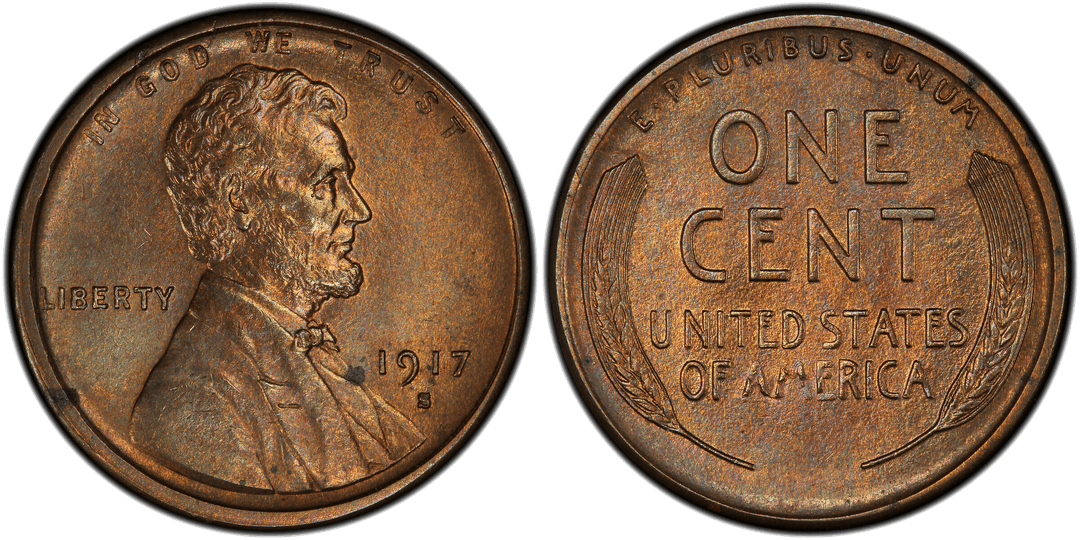
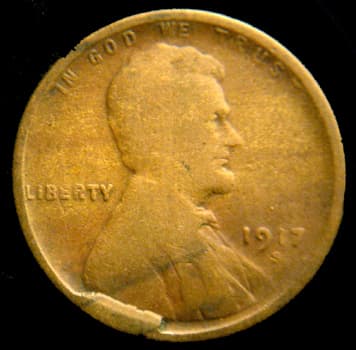
Second retained cud cataloged for the 1917-S Lincoln wheat cent reverse by the Cuds on Coins attribution service, RCD-1c-1917S-02R records a die rim failure on this World War I-era San Francisco Mint production. The "R" suffix confirms the retained cud appears on Victor David Brenner's wheat ears reverse, and the "02" designation indicates a second distinct die rim fracture has been documented for this date and mint, separate from the first retained cud identified as RCD-1c-1917S-01R. San Francisco struck approximately 32.62 million cents in 1917, a wartime production level driven by continued domestic demand for small change even as the nation mobilized for its entry into the Great War in April of that year. The dies used for 1917-S production were manufactured at the Philadelphia Mint and shipped west, and any variability in die steel composition or heat treatment between batches could influence the die's resistance to rim cracking. A retained cud develops when the rim portion of a die fractures but the broken section remains attached, sinking below the surrounding surface and producing a raised, partially formed area on every subsequent coin struck. Two documented retained cuds for the 1917-S cent suggest either two separate die pairs experienced independent rim failures, or a single die developed sequential rim cracks at different locations around the periphery as its service life extended. The wheat cent reverse rim presents a continuous target for cracking, as the transition between the raised rim and the inward-curving wheat ear design creates stress risers where fractures preferentially initiate. Collectors should examine the reverse rim under at least 10x magnification, looking for a raised shelf area that displays softer detail than the surrounding well-struck rim and design elements, distinguishing it from the first retained cud by its specific clock-position location.
Attribution History
- Discovered by Chuck Newman
- Expert attribution by Cuds on Coins
External References
Community & Reference
Related Errors


More Retained Cud Errors
Collector Essentials
Tools for examining and preserving error coins and die varieties.
10x-20x Jeweler's Loupe
Essential for examining die varieties, doubled dies, and RPMs
Cherry Picker's Guide
The definitive reference for U.S. error coins and die varieties
2x2 Coin Flips & Holders
Protect and organize your finds with archival-quality holders
USB Digital Microscope
Capture detailed images for documentation and community submissions
As an Amazon Associate, NumisDex earns from qualifying purchases.