
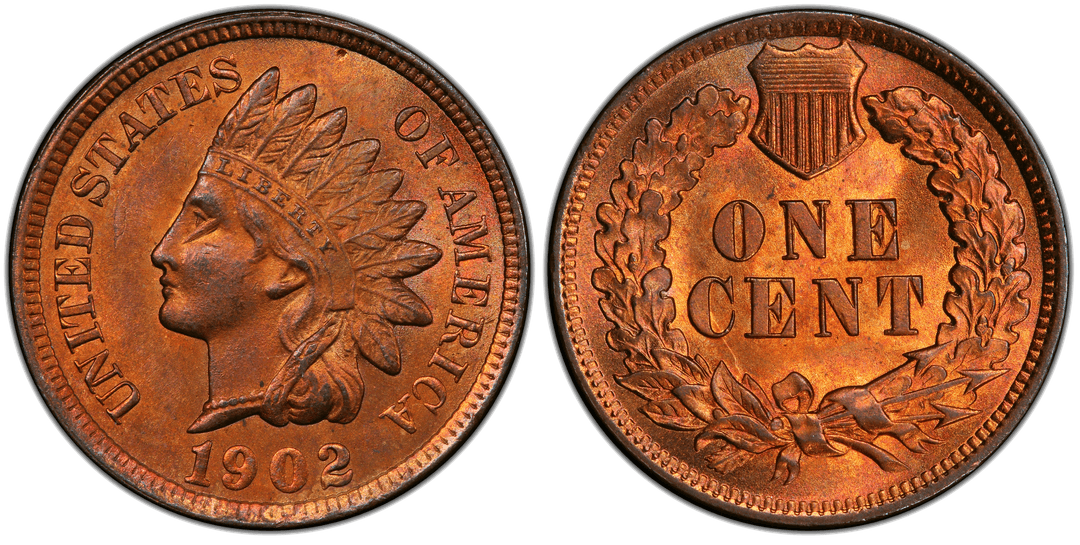
1902 Typical Die Clash TDC-1C-1902-01
Error
Description
Documented as TDC-1C-1902-01, this 1902 Indian Head Cent exhibits a typical die clash in unabraded state — meaning the clash marks have not been reduced by subsequent die polishing, preserving the full detail of transferred design elements. The coin was provided by George Finster for study. Struck in bronze (95% copper, 5% tin and zinc) at Philadelphia, this cent carries James B. Longacre's Indian Head design during the Progressive Era, approaching its final decade before the Lincoln Cent replaced it in 1909. Clash marks from the right branch of the laurel wreath are visible on the obverse, transferred when the dies struck each other without a planchet. Similarly, clash marks from the feather details and from Liberty's forehead are visible on the opposing side. The unabraded condition is significant because Mint workers often attempted to remove clash evidence by polishing the affected dies — a practice that reduced but rarely eliminated transferred impressions. When a clashed die escaped polishing, the resulting coins preserve the fullest expression of the clash event.
External References
Community & Reference
Related Errors



More Typical Die Clash Errors



Collector Essentials
Tools for examining and preserving error coins and die varieties.
10x-20x Jeweler's Loupe
Essential for examining die varieties, doubled dies, and RPMs
Cherry Picker's Guide
The definitive reference for U.S. error coins and die varieties
2x2 Coin Flips & Holders
Protect and organize your finds with archival-quality holders
USB Digital Microscope
Capture detailed images for documentation and community submissions
As an Amazon Associate, NumisDex earns from qualifying purchases.