
RCD-1c-1892-03R Retained Cud
Error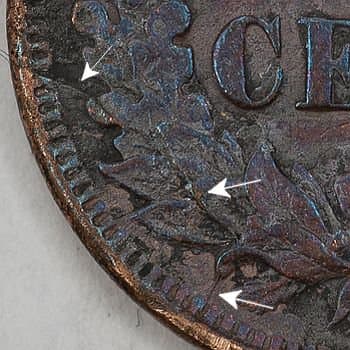
Description
Third among the retained cuds for the 1892 Indian Head Cent, RCD-1c-1892-03R was struck at Philadelphia and documented by Cuds on Coins. The 1892 cent was produced in the standard bronze alloy of 95% copper with 5% tin and zinc, a composition serving the denomination without interruption since 1864. A retained cud forms when a working die develops a crack extending to the rim, and the resulting wedge-shaped fragment fractures but remains mechanically captured rather than falling away. Subsequent strikes produce coins bearing a raised irregular mass — the impression of the retained fragment — partially covering the normal design with a distorted remnant of the features it once carried. Philadelphia's cent production in 1892 coincided with the Columbian Exposition year, a period of national celebration that preceded the severe economic downturn of the Panic of 1893. Three retained cuds for the date represents a modest tally, suggesting either conservative die management or relatively favorable die longevity conditions. For Indian Head Cent specialists, retained cuds from the early 1890s provide a window into die behavior during the mature phase of the series.
Attribution History
- Discovered by Jared Vineyard, PhD
- Cross reference: none. 01/18/2021.
- Expert attribution by Cuds on Coins
External References
Community & Reference
Related Errors

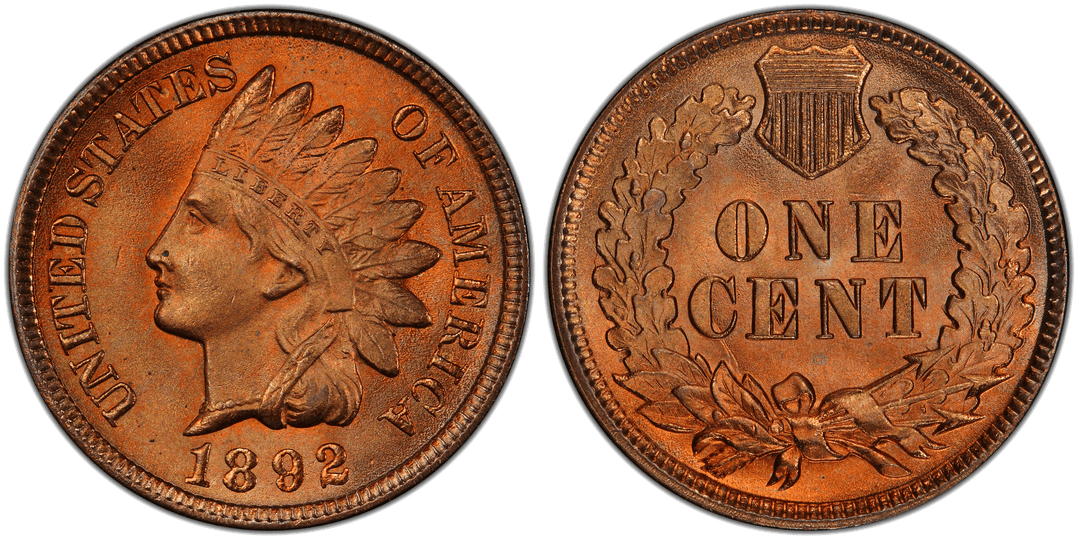


More Retained Cud Errors
Collector Essentials
Tools for examining and preserving error coins and die varieties.
10x-20x Jeweler's Loupe
Essential for examining die varieties, doubled dies, and RPMs
Cherry Picker's Guide
The definitive reference for U.S. error coins and die varieties
2x2 Coin Flips & Holders
Protect and organize your finds with archival-quality holders
USB Digital Microscope
Capture detailed images for documentation and community submissions
As an Amazon Associate, NumisDex earns from qualifying purchases.