
RCD-5c-1867-20 Retained Cud
Error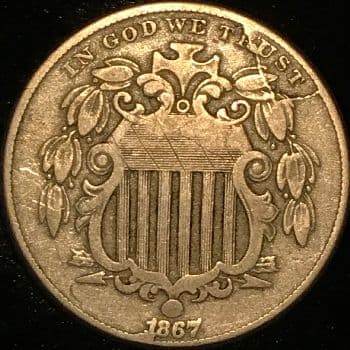
Description
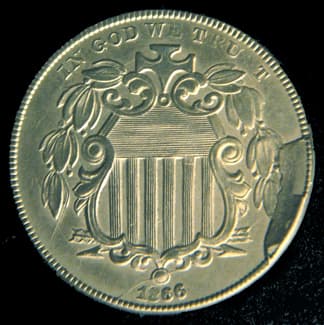
An extraordinary twenty retained cuds documented for the 1867 Shield Nickel without Rays, RCD-5c-1867-20 reveals that removing the rays was far from a complete solution to the die failure problem. Twenty distinct working dies developing retained rim fractures within a single year and subtype demonstrates that the copper-nickel alloy imposed severe demands on die steel regardless of design refinements. The Shield Nickel was only in its second year as the United States' first base-metal five-cent piece, and the Mint was still learning to manage die life with this unfamiliar alloy after centuries of striking precious metals. James B. Longacre's design served from 1866 through 1883, when Charles Barber's Liberty Head Nickel replaced it. A retained cud at sequence twenty confirms the rim as the most vulnerable zone — where thin die edges meet maximum striking force — and each die fractured in its own unique location and angle. Struck at 5.0 grams at Philadelphia, the 1867 No Rays mintage of approximately 28.9 million generated enormous die consumption. Cataloged by Cuds on Coins. Examine the rim for this twentieth documented retained fracture, comparing its profile against the 1867-05 and 1867-08 entries.
Attribution History
- Discovered by Nycappedbust (instagram)
- Expert attribution by Cuds on Coins
External References
Community & Reference
Related Errors



More Retained Cud Errors
Collector Essentials
Tools for examining and preserving error coins and die varieties.
10x-20x Jeweler's Loupe
Essential for examining die varieties, doubled dies, and RPMs
Cherry Picker's Guide
The definitive reference for U.S. error coins and die varieties
2x2 Coin Flips & Holders
Protect and organize your finds with archival-quality holders
USB Digital Microscope
Capture detailed images for documentation and community submissions
As an Amazon Associate, NumisDex earns from qualifying purchases.