
RCD-5c-1867-19R Retained Cud
Error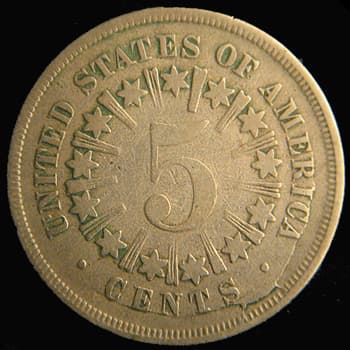
Description
Nineteenth reverse retained cud cataloged for the 1867 Shield Nickel No Rays variety, RCD-5c-1867-19R records an advanced die break where a section of the die rim has cracked and partially separated but remains physically connected to the die body. The Cuds on Coins attribution service documented this variety using their standard nomenclature: RCD for retained cud, 5c for the five-cent denomination, 1867 for the date, and 19R indicating the nineteenth reverse retained cud for this issue. James B. Longacre's Shield nickel underwent its first design modification in 1867 when the rays between the reverse stars were removed after only one year of production — the With Rays design of 1866 had caused severe die wear, and the No Rays revision reduced the opposing high-relief elements that had stressed the coining equipment. Philadelphia struck approximately 28.89 million No Rays Shield nickels in 1867, a substantial production run for the still-new denomination. Retained cuds represent a more advanced stage of die failure than pre-cuds: the die steel has not merely cracked but has actually begun to separate, creating a displaced area that produces a raised, irregularly shaped mass on the struck coin. The metal in this retained section still receives some impression from the die cavity behind it but at an altered angle, creating a distinctive combination of partially impressed design and raised blank area. The 19R designation — nineteenth reverse retained cud for a single date — indicates systematic die deterioration across the 1867 production run, consistent with the mechanical demands of striking the hard 75% copper, 25% nickel alloy that had only been in production for two years. Collectors can identify retained cuds by the characteristic raised area at the rim that shows partial design detail rather than the completely blank surface of a fully separated cud.
Attribution History
- Discovered by Chuck Newman
- Expert attribution by Cuds on Coins
External References
Community & Reference
Related Errors


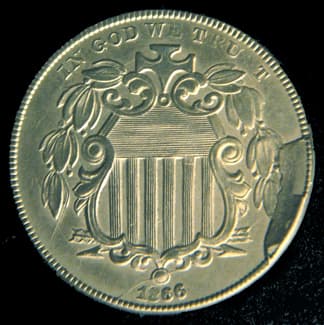

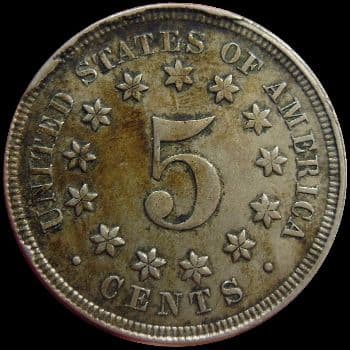
More Retained Cud Errors
Collector Essentials
Tools for examining and preserving error coins and die varieties.
10x-20x Jeweler's Loupe
Essential for examining die varieties, doubled dies, and RPMs
Cherry Picker's Guide
The definitive reference for U.S. error coins and die varieties
2x2 Coin Flips & Holders
Protect and organize your finds with archival-quality holders
USB Digital Microscope
Capture detailed images for documentation and community submissions
As an Amazon Associate, NumisDex earns from qualifying purchases.