
RCD-5c-1867-03 Retained Cud
Error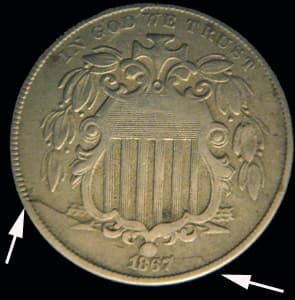
Description
Cataloged by Cuds on Coins as RCD-5c-1867-03, this retained cud appears on an 1867 Shield Nickel of the No Rays sub-type struck at Philadelphia. The Shield Nickel was introduced in 1866 as the first five-cent piece in the copper-nickel alloy of 75% copper and 25% nickel that would define the denomination for over a century. The original design featured decorative rays between the reverse stars, but these were removed during 1867 production because they caused excessive die wear, making No Rays the standard configuration through 1883. A retained cud forms when a die crack reaches the rim and a section fractures but remains mechanically trapped, continuing to strike coins bearing a raised irregular mass that partially obscures the underlying design. The copper-nickel composition presented challenges for die longevity, as the alloy's hardness transmitted striking forces back into the die face more aggressively than softer metals. Three retained cuds for the 1867 No Rays issue documents terminal die failures from the formative year of this important sub-type, when the Mint was still adapting to the demands of the new composition.
Attribution History
- Discovered by Fred Weinberg
- Expert attribution by Cuds on Coins
External References
Community & Reference
Related Errors


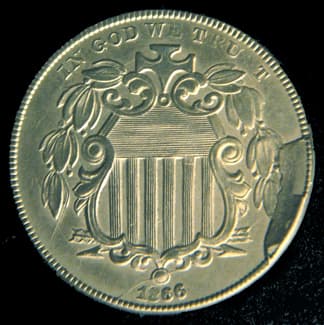

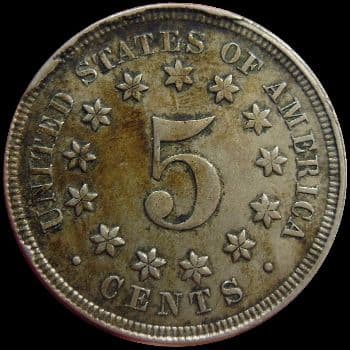
More Retained Cud Errors
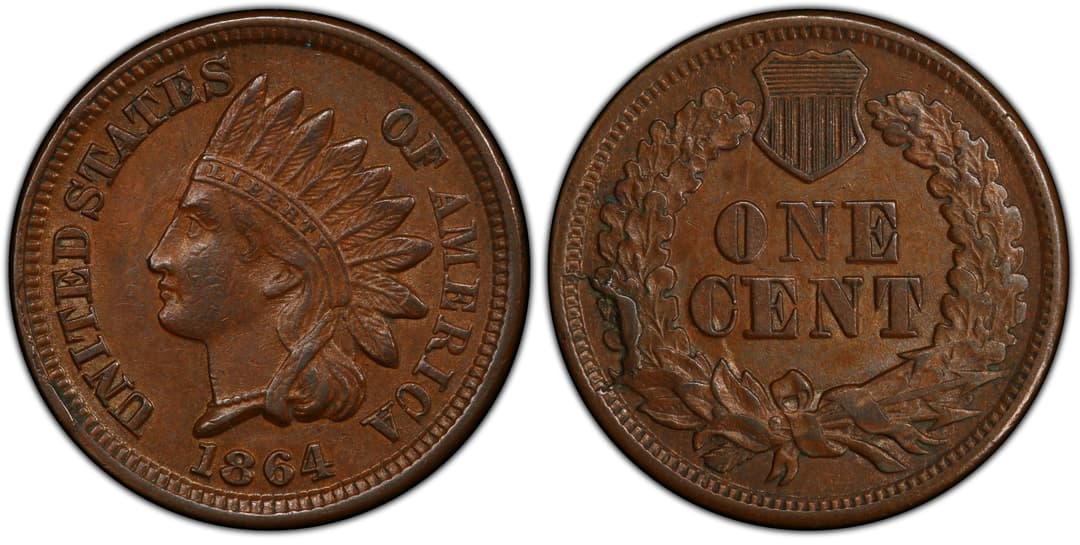
Collector Essentials
Tools for examining and preserving error coins and die varieties.
10x-20x Jeweler's Loupe
Essential for examining die varieties, doubled dies, and RPMs
Cherry Picker's Guide
The definitive reference for U.S. error coins and die varieties
2x2 Coin Flips & Holders
Protect and organize your finds with archival-quality holders
USB Digital Microscope
Capture detailed images for documentation and community submissions
As an Amazon Associate, NumisDex earns from qualifying purchases.