
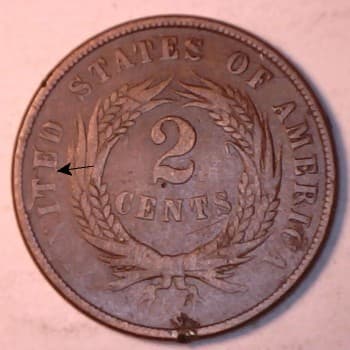
PC-2c-1866-01R Die Break
Error
Description
Documented by the Cuds on Coins attribution service, PC-2c-1866-01R records the first cataloged reverse die break on the 1866 Two Cent Piece. A die break occurs when a section of the die fractures and separates, leaving a void in the die surface that produces a raised, featureless area of unstruck metal on the coin — the planchet metal flows into the gap left by the missing die fragment, creating a blob-like protrusion that obliterates the underlying design in that area. The "R" suffix confirms this break appears on the reverse of James B. Longacre's two cent piece, which features a wreath of wheat, corn, cotton, and tobacco encircling a shield with the numeral 2 and the inscription UNITED STATES OF AMERICA around the periphery. The 1866 production represents the third year of the two cent denomination, which had been authorized by the Act of April 22, 1864, as part of the Civil War-era coinage reforms. Philadelphia — the sole mint striking two cent pieces — continued producing these coins in substantial numbers through the mid-1860s, though declining public acceptance would eventually lead to the denomination's demise after 1873. Die breaks on two cent pieces are noteworthy because the denomination's relatively brief production span (1864-1873) limits the total population of surviving die varieties, making each documented instance a meaningful addition to the numismatic record. The 95% copper, 5% tin and zinc composition and the 23mm diameter required moderate striking pressure, and the deeply sculpted wreath reverse with its intertwined agricultural elements presented complex die topography where fractures could develop along the boundaries between high-relief design elements. Collectors should examine the reverse for a raised, irregular area where the normal wreath or lettering design has been replaced by a formless mass of displaced planchet metal, indicating where the die fragment broke away. The specific location and size of the break distinguish this variety from any subsequently documented die breaks on the 1866 two cent piece.
External References
Community & Reference
Related Errors
More Die Break Errors


Collector Essentials
Tools for examining and preserving error coins and die varieties.
10x-20x Jeweler's Loupe
Essential for examining die varieties, doubled dies, and RPMs
Cherry Picker's Guide
The definitive reference for U.S. error coins and die varieties
2x2 Coin Flips & Holders
Protect and organize your finds with archival-quality holders
USB Digital Microscope
Capture detailed images for documentation and community submissions
As an Amazon Associate, NumisDex earns from qualifying purchases.