
1804 Draped Bust Large Cent S-266 Cuds Obverse and Reverse
Error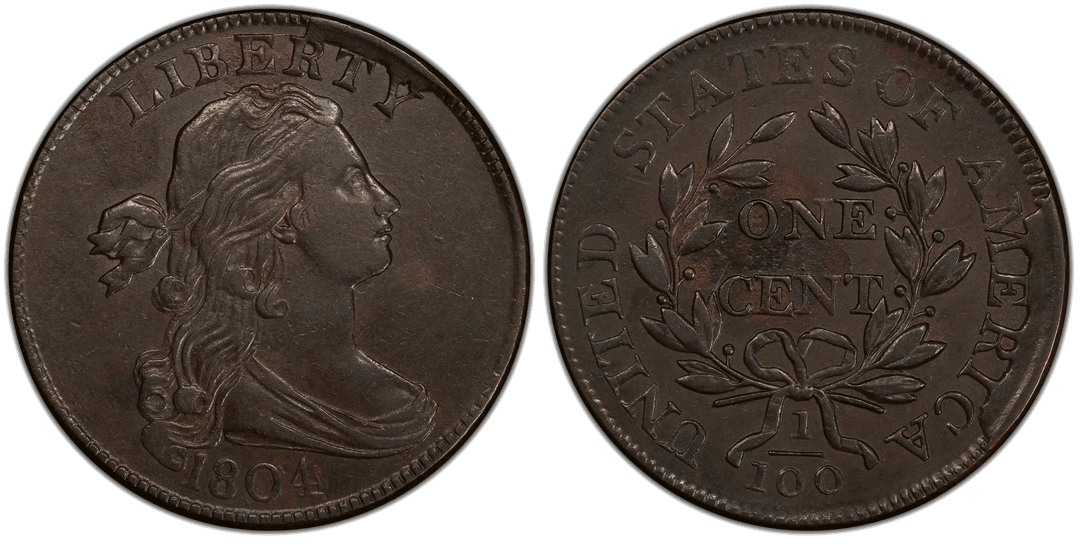
Description
Bearing cuds on both the obverse and reverse — a dual-surface die break that is uncommon at any period but especially notable on early copper — this 1804 Draped Bust Large Cent is identified as Sheldon S-266 in the standard reference for early American large cents. On the obverse, a section of the die along the rim broke away above the letters RTY in LIBERTY, creating a raised featureless area where the die cavity filled with metal during striking. The reverse shows a parallel failure outside MERIC in AMERICA, meaning both the obverse and reverse dies experienced rim fractures during the same production period. The 1804 Draped Bust Cent was struck during the earliest years of the United States Mint in Philadelphia, when the young republic was still establishing its coinage traditions with hand-operated screw presses and dies that were individually crafted by skilled engravers. Early copper large cents are classified through the Sheldon numbering system devised by Dr. William Sheldon in 1949, which assigns unique numbers to each die variety based on obverse-reverse die pairings. The Draped Bust design, engraved after a Gilbert Stuart portrait of Liberty, was produced from 1796 through 1807. Finding both dies in a single pairing exhibiting cuds suggests both had reached advanced stages of deterioration simultaneously.
Attribution History
- Discovered by NumisDexDealer
- Sheldon S-266
Community & Reference
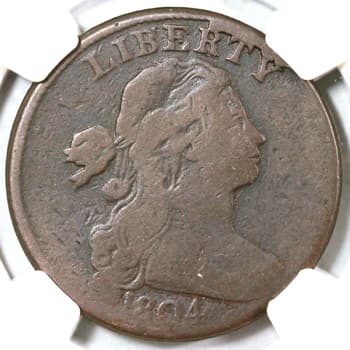
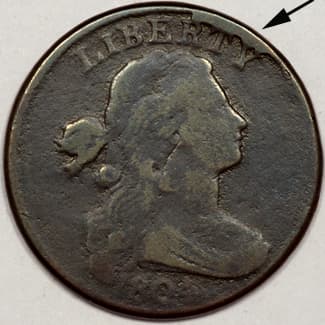
Related Errors
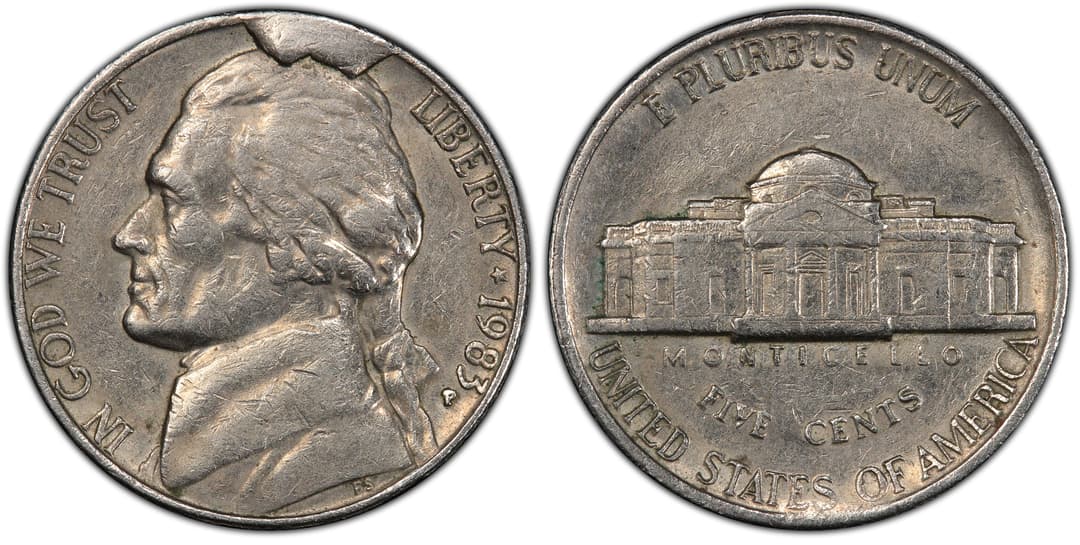
More Cud Errors
Collector Essentials
Tools for examining and preserving error coins and die varieties.
10x-20x Jeweler's Loupe
Essential for examining die varieties, doubled dies, and RPMs
Cherry Picker's Guide
The definitive reference for U.S. error coins and die varieties
2x2 Coin Flips & Holders
Protect and organize your finds with archival-quality holders
USB Digital Microscope
Capture detailed images for documentation and community submissions
As an Amazon Associate, NumisDex earns from qualifying purchases.