
1801 Draped Bust Large Cent (100/000) S-221 Reverse Cud
Error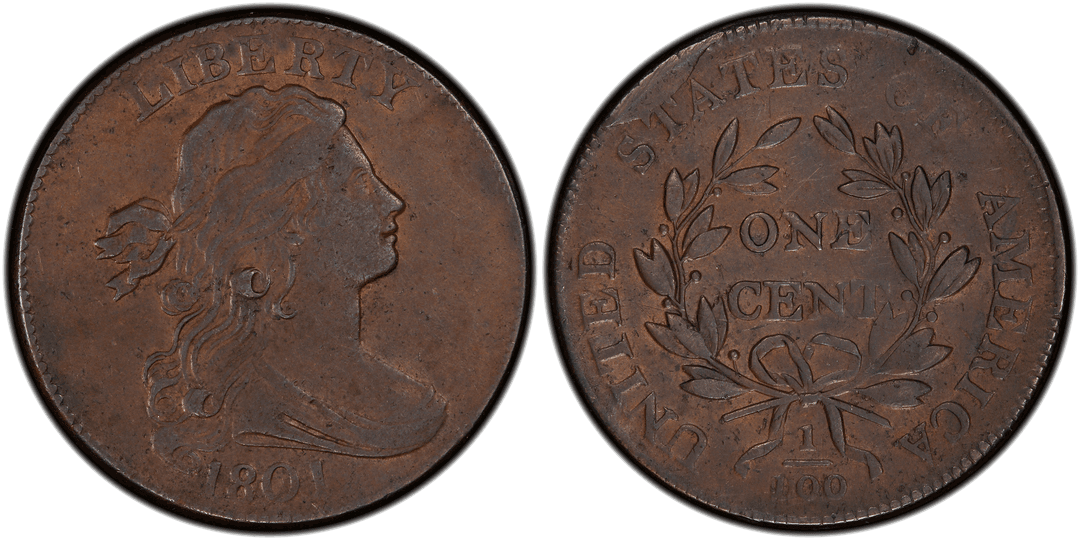
Description
Combining two distinct die anomalies — the famous 100/000 fraction error and a reverse cud die break — this 1801 Draped Bust large cent (Sheldon S-221) is doubly significant to early American copper specialists. The cud is visible on the reverse just outside of "STAT" in "STATES," where a section of the die rim broke away completely, leaving a cavity that filled with metal during striking to produce a raised featureless mass. Cuds form when repeated striking forces cause fatigue fractures at the die rim, and the broken fragment separates entirely from the die body. The Sheldon S-221 die variety is simultaneously the 100/000 fraction variety, where the fraction on the reverse reads "100" over "000" rather than the intended "1/100" — one of the most famous errors in early American numismatics. The 1801 Draped Bust Cent was struck at the Philadelphia Mint during the earliest years of the republic, when the Mint was still developing its production capabilities and die steel quality was inconsistent. Robert Scot's Draped Bust design, introduced in 1796, featured Liberty with flowing hair and a draped bust on the obverse. Large cents of this era — approximately 29mm in diameter and struck on thick copper planchets — are collected avidly through both the Sheldon and Breen numbering systems, and die combinations with multiple attributable features like this specimen command particular attention from early copper specialists.
Attribution History
- Discovered by NumisDexDealer
- Sheldon S-221
Community & Reference
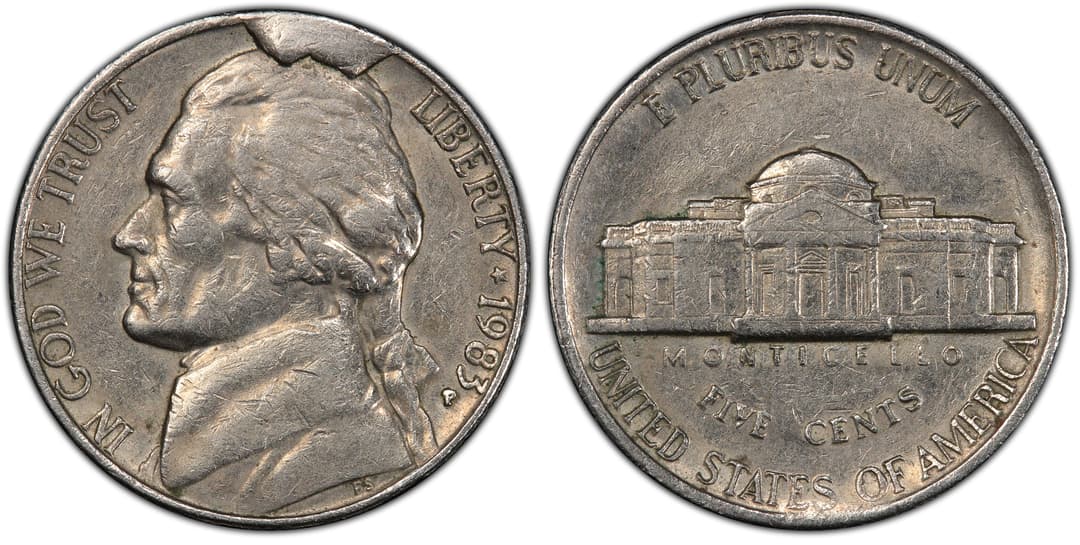
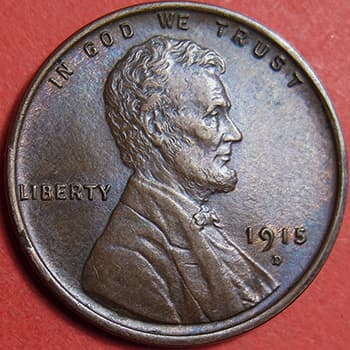
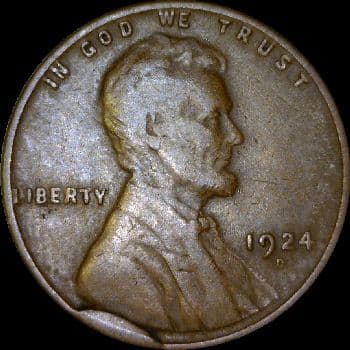
More Cud Errors
Collector Essentials
Tools for examining and preserving error coins and die varieties.
10x-20x Jeweler's Loupe
Essential for examining die varieties, doubled dies, and RPMs
Cherry Picker's Guide
The definitive reference for U.S. error coins and die varieties
2x2 Coin Flips & Holders
Protect and organize your finds with archival-quality holders
USB Digital Microscope
Capture detailed images for documentation and community submissions
As an Amazon Associate, NumisDex earns from qualifying purchases.