
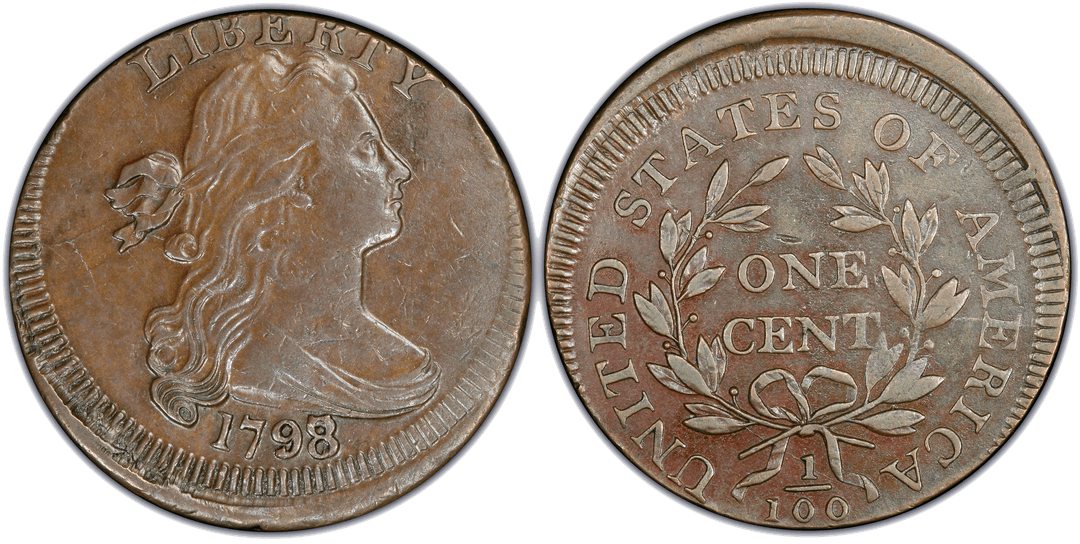
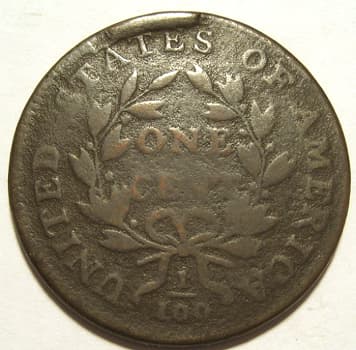
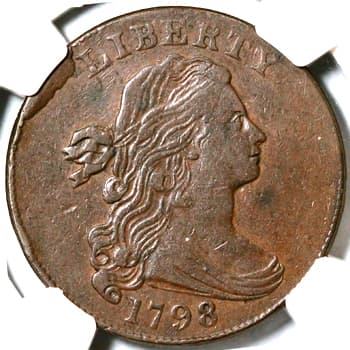
CU-1C-1798-06 Cud
Error
Description
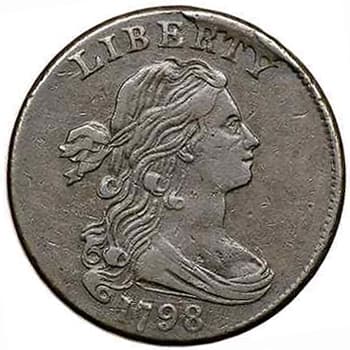
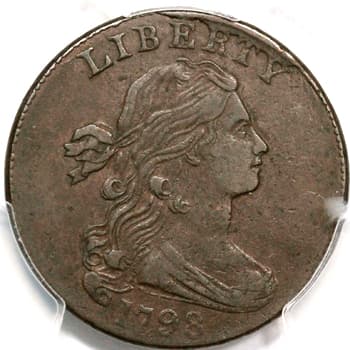
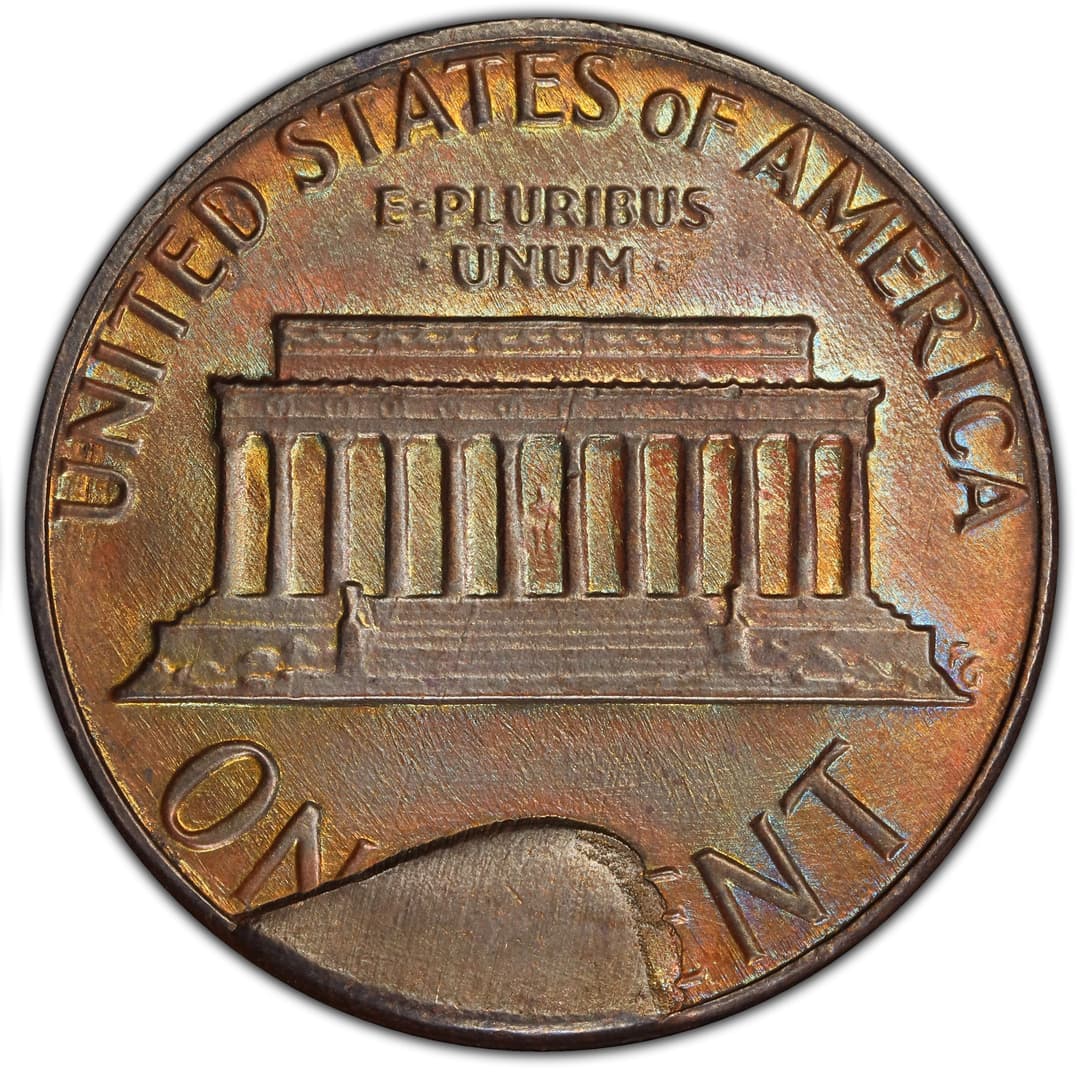
Hand-engraved from softened steel and then hardened for production use, early federal coin dies were inherently more vulnerable to fracture than their modern machine-made counterparts — a fragility on full display in this sixth documented cud for the 1798/7 Overdate Draped Bust Cent. Each die at the Philadelphia Mint in the 1790s was individually cut by an engraver using hand tools, a process that introduced microscopic inconsistencies in the steel's grain structure. These imperfections became stress concentration points under the repeated impact of the screw press, and over thousands of impressions a crack could propagate outward until a rim section broke away entirely. The resulting cud — a raised featureless mass where the missing die fragment left a cavity — stands as physical evidence of that metallurgical failure. Six documented cuds for the 1798/7 overdate attest to the demanding conditions under which these early copper cents were produced, where die steel quality, hand engraving techniques, and the brute force of the screw press converged to make rim fractures a recurring production hazard. Cataloged by Cuds on Coins.
Attribution History
- Discovered by pq_coins on eBay
- CU-1C-1798-06
- Expert attribution by Cuds on Coins
External References
Community & Reference
Related Errors
More Cud Errors
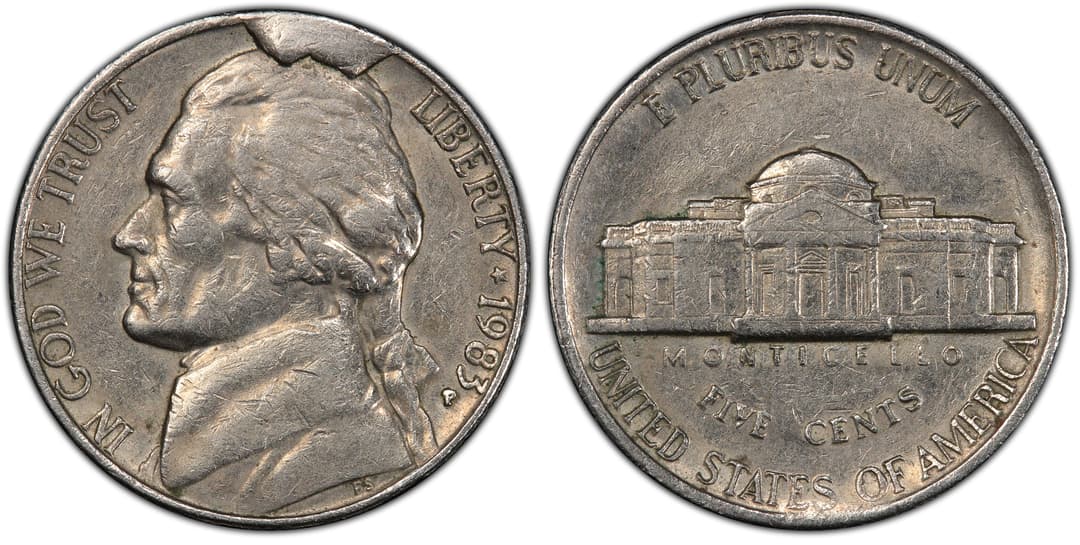
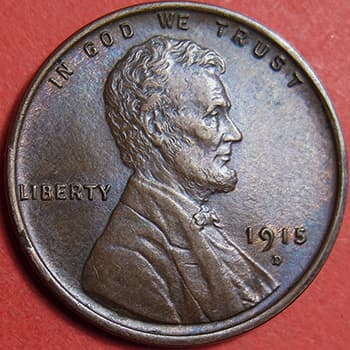
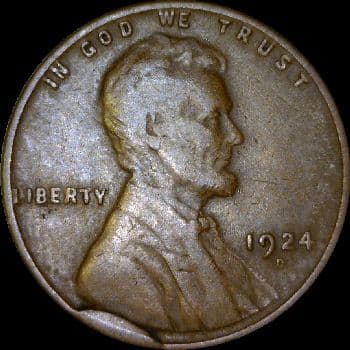
Collector Essentials
Tools for examining and preserving error coins and die varieties.
10x-20x Jeweler's Loupe
Essential for examining die varieties, doubled dies, and RPMs
Cherry Picker's Guide
The definitive reference for U.S. error coins and die varieties
2x2 Coin Flips & Holders
Protect and organize your finds with archival-quality holders
USB Digital Microscope
Capture detailed images for documentation and community submissions
As an Amazon Associate, NumisDex earns from qualifying purchases.