
SHD-10c-1891-01 Shattered Die
Error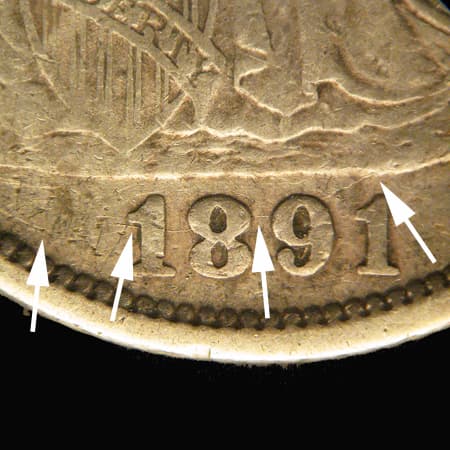
Description
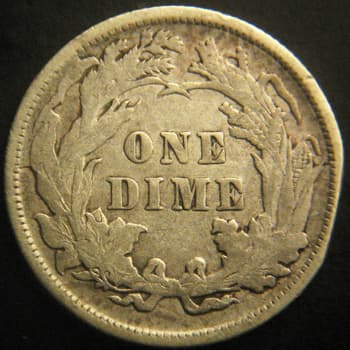
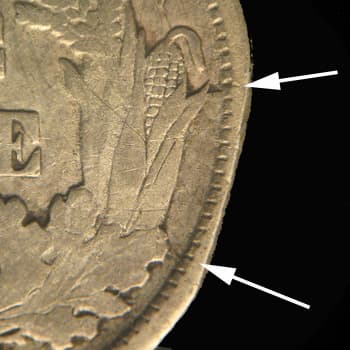
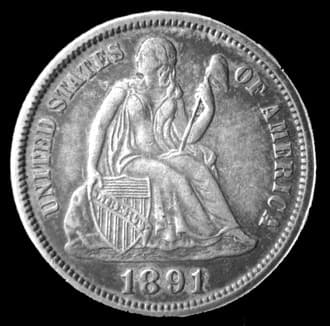
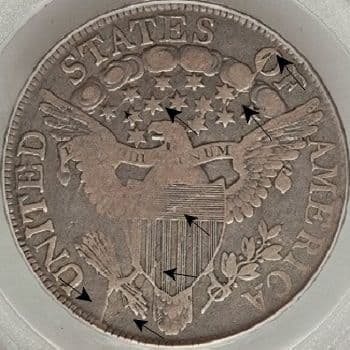
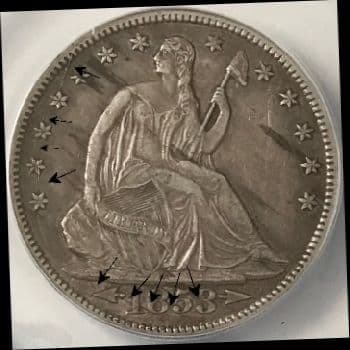
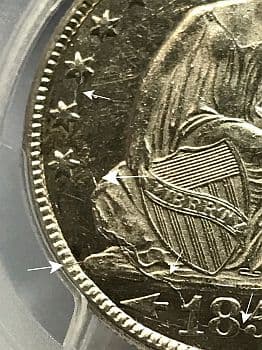
First and sole shattered die cataloged for the 1891 Seated Liberty dime by the Cuds on Coins attribution service, SHD-10c-1891-01 documents an advanced stage of die failure where the working die developed an extensive network of cracks radiating across the design surface — the terminal phase of die deterioration that produces a web-like pattern of raised lines on struck coins. Christian Gobrecht's Seated Liberty dime design had been in continuous production since 1837, and 1891 marked its final year before Charles E. Barber's new Liberty Head design replaced it in 1892, making this shattered die a remnant of the design's fifty-four-year sunset. Philadelphia struck approximately 15.31 million Seated Liberty dimes in 1891, the highest mintage of the design's final decade and a production level that pushed working dies through extended service life. Shattered dies represent the most extreme form of die deterioration: what typically begins as a single hairline crack from the rim propagates through the die steel in multiple directions as striking continues, eventually creating an interconnected fracture network that covers a substantial portion of the die surface. Each crack transfers as a raised line on the struck coin, and when enough cracks intersect, they produce the characteristic "shattered" appearance — irregular polygonal zones bounded by raised ridges that give the coin's surface a fractured-glass quality. The SHD designation follows the standard Cuds on Coins format: SHD for shattered die, 10c for the ten-cent denomination, 1891 for the date, and 01 for the sequence number. Unlike pre-cuds or retained cuds that document localized rim fractures, shattered dies record catastrophic die failure across the full design area. Collectors should examine specimens under 5-10x magnification looking for the raised crack network that extends across multiple design elements, distinguishing die-originated lines from post-strike scratches by their consistent presence on all coins from this die and their characteristic sharp, slightly raised profile.
Attribution History
- Discovered by Chuck Newman
- Expert attribution by Cuds on Coins
External References
Community & Reference
Related Errors
More Shattered Die Errors
Collector Essentials
Tools for examining and preserving error coins and die varieties.
10x-20x Jeweler's Loupe
Essential for examining die varieties, doubled dies, and RPMs
Cherry Picker's Guide
The definitive reference for U.S. error coins and die varieties
2x2 Coin Flips & Holders
Protect and organize your finds with archival-quality holders
USB Digital Microscope
Capture detailed images for documentation and community submissions
As an Amazon Associate, NumisDex earns from qualifying purchases.