
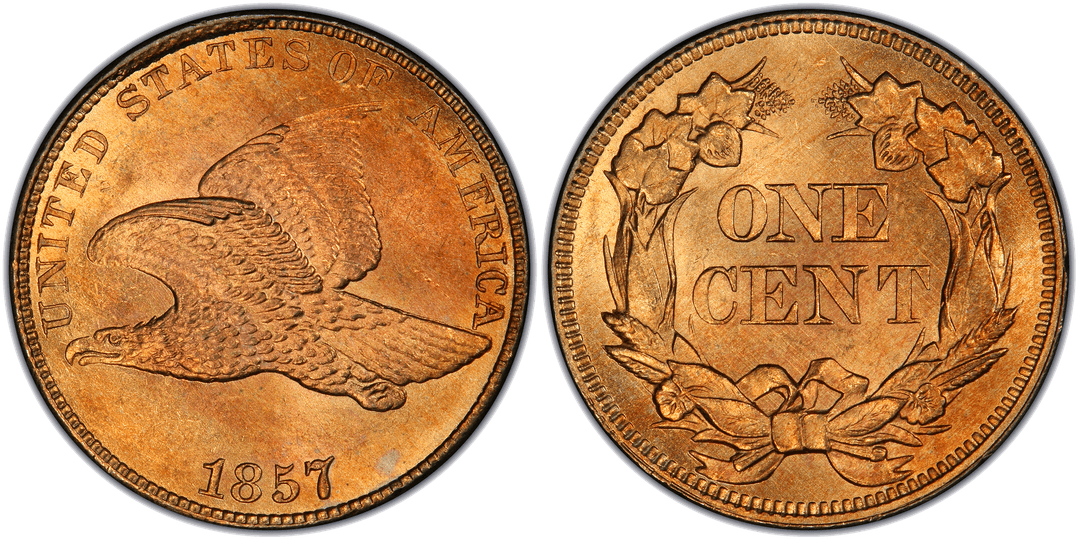
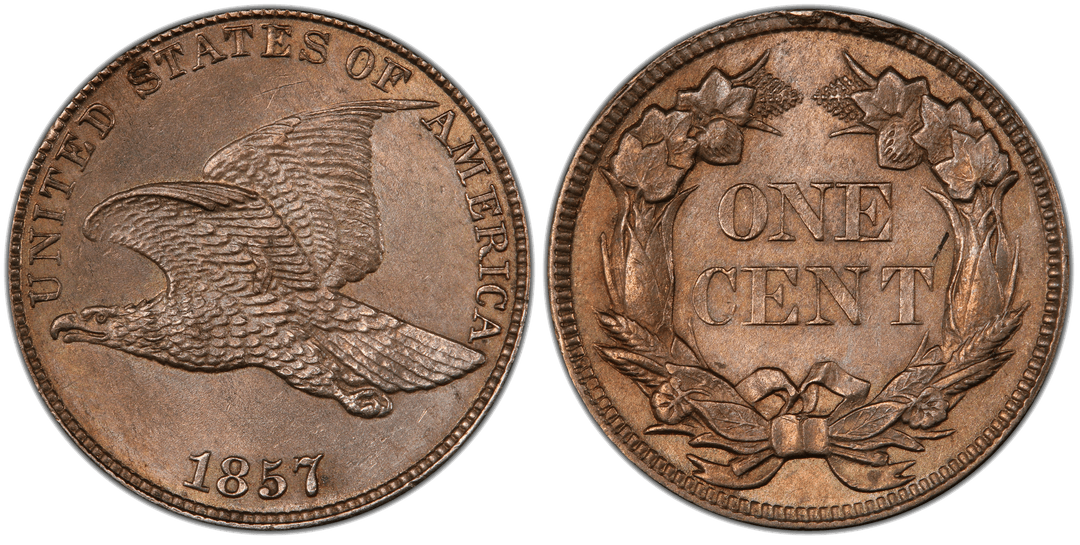
1857 Flying Eagle Cent Lamination Peel
Error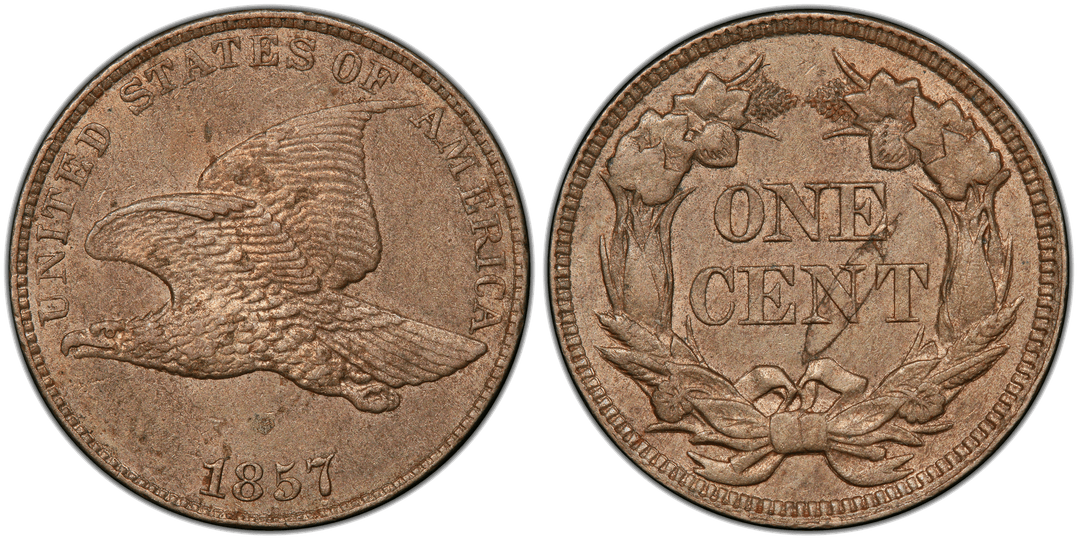
Community Voting
This listing needs 10.0 weighted votes to advance to community review.
Description
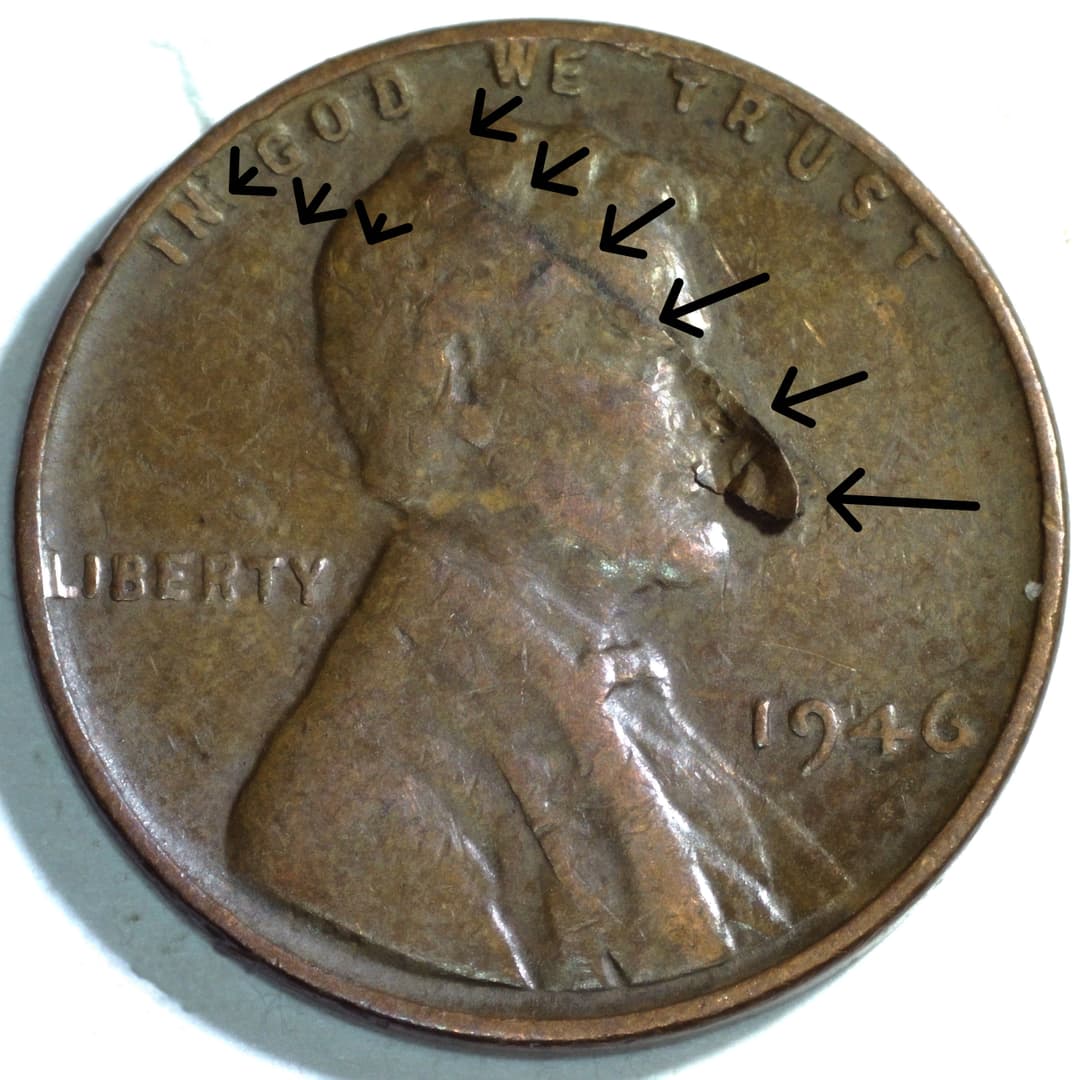
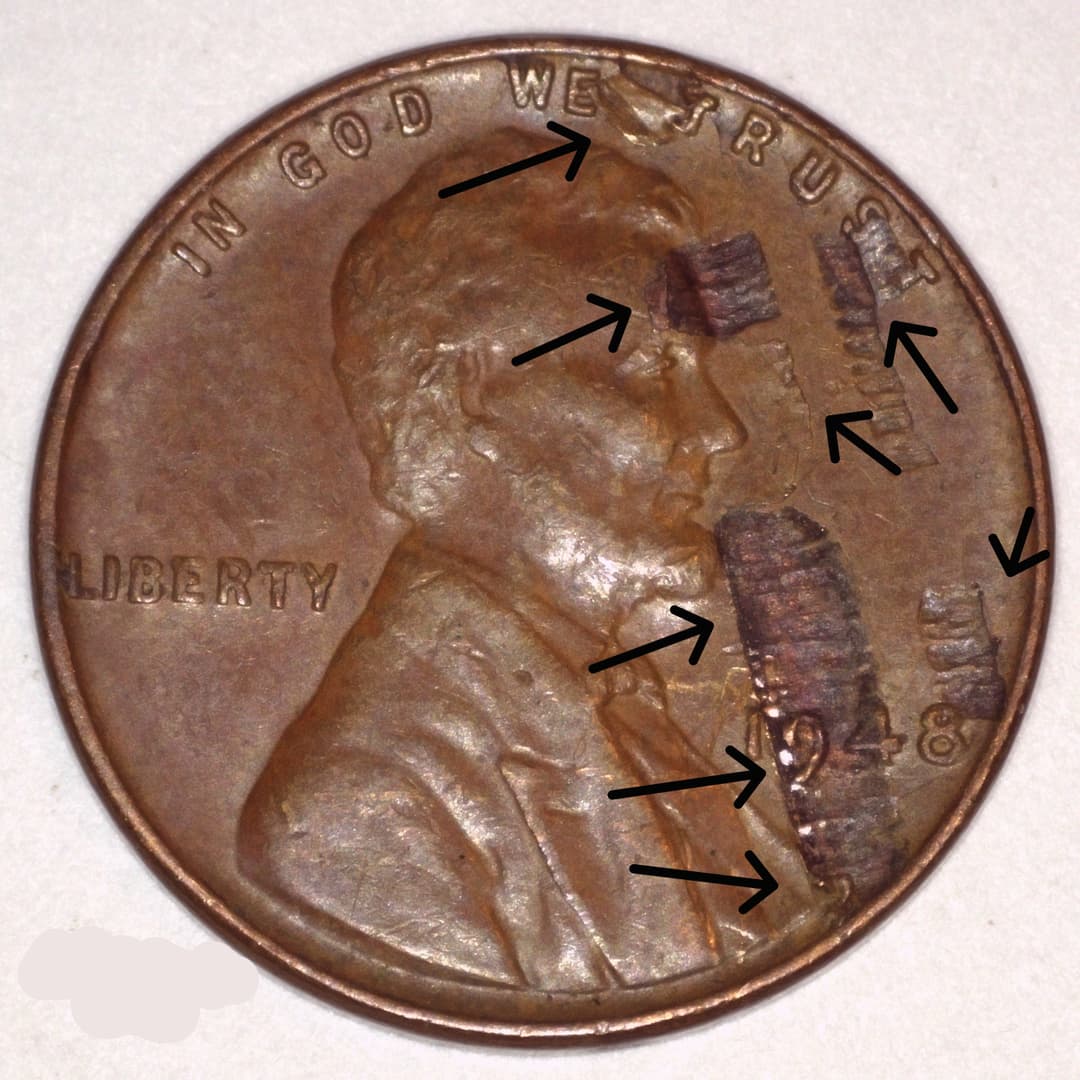
A lamination peel extends across the reverse of this 1857 Flying Eagle cent, running from the E in ONE through the N in CENT to the bow of the wreath. Lamination defects are planchet errors occurring before striking, when impurities, gas pockets, or improper metal mixing cause internal layers to separate. The separated layer may remain as a raised flap or peel away entirely, leaving an irregular recess. The 1857 Flying Eagle cent was struck in 88% copper and 12% nickel, a composition prone to lamination because of the difficulty of thoroughly mixing metals with different melting points and densities. The Flying Eagle series, limited to 1856-1858, was the Mint's first small cent denomination, transitioning away from large copper cents produced since 1793. The specific path of this peel across multiple reverse design elements makes it a well-documented example of the metallurgical challenges inherent in the new copper-nickel alloy.
Community & Reference
Related Errors
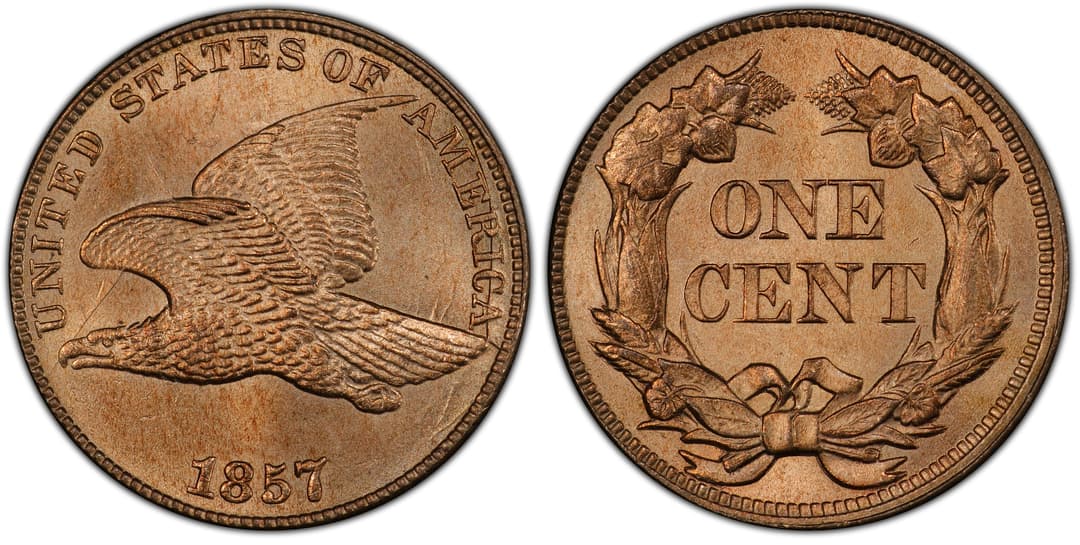
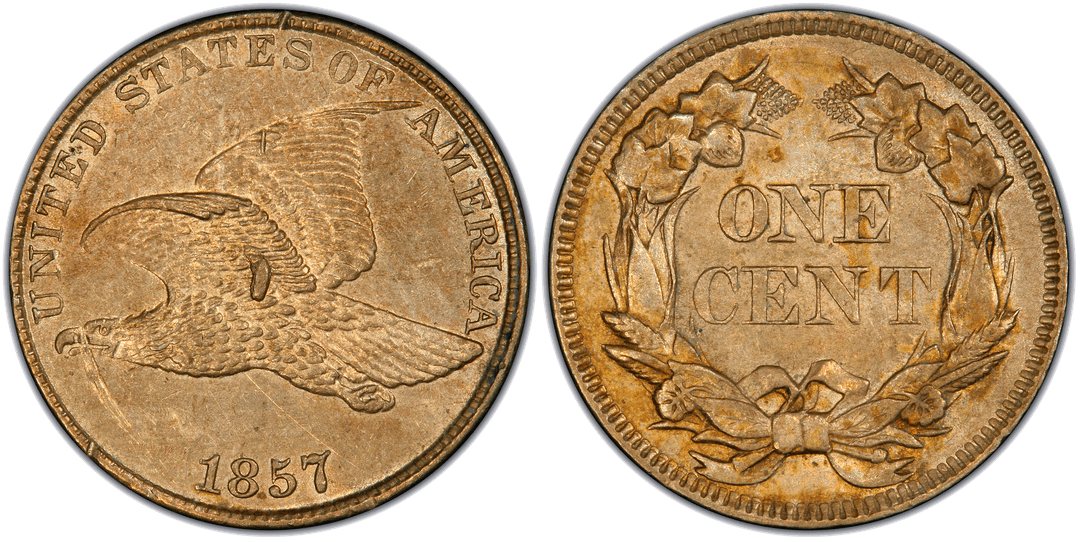
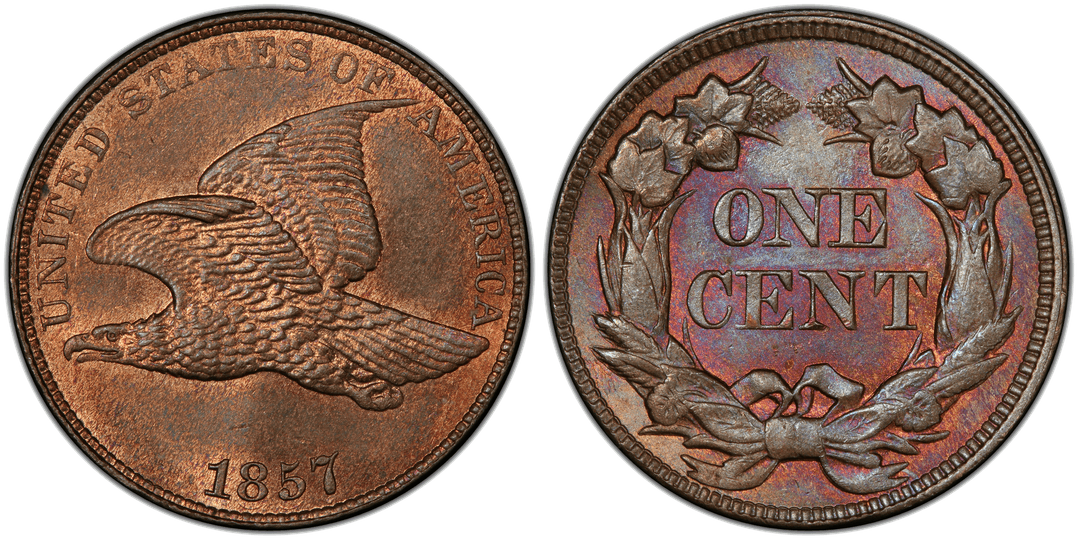
More Lamination Errors
Collector Essentials
Tools for examining and preserving error coins and die varieties.
10x-20x Jeweler's Loupe
Essential for examining die varieties, doubled dies, and RPMs
Cherry Picker's Guide
The definitive reference for U.S. error coins and die varieties
2x2 Coin Flips & Holders
Protect and organize your finds with archival-quality holders
USB Digital Microscope
Capture detailed images for documentation and community submissions
As an Amazon Associate, NumisDex earns from qualifying purchases.